Filters
How to Anchor a Floating Dock
Dock anchoring is essential for keeping your water vessels and docks in good condition for longer. Exploring the most common types of anchors and how to install them in different waters will help ensure you get the right type of anchor and simplify the installation process. Correctly anchoring your dock protects it from wind, waves and changing water levels. Here are some dock anchoring FAQs to answer your many questions about best practices and tips.
What Types of Boat Dock Anchors Are There?
Boat dock anchors make it easier to attach your boat dock to different water levels. Whether you plan to add a boat dock to a shallow area or deep lake water, you’ll want to find a suitable anchor that fits your needs.
1. Cable Dock Anchoring Systems
Cable anchoring is one of the most common and affordable methods. In shallow water, a cable anchor attaches the dock to weights or the shore, but it is most often used in deep water applications with frequent water level fluctuations. In these applications, cable anchoring systems use strong cables and ropes attached directly to the seabed. They run along the edges and corners of floating docks to keep them in place.
Most boat enthusiasts enjoy cable anchors for their flexible mobility. By moving away or toward the shoreline, cable anchors can adjust to the weather, season or current water levels. This system can be combined with other anchoring systems to secure floating docks. Cable anchors are also an excellent choice during the following conditions:
- Water fluctuations: Changing water levels or fluctuating weather conditions affect the water level.
- Heavy winds: Heavy winds could affect the water’s conditions or the anchor’s ability to stay put.
- Wave loads: If the water on the shoreline, ocean or lake experiences large wave loads, it may affect the dock’s stability.
- Multiple cable applications: Several cables can be used to attach the anchor to the shore and improve safety and durability.
2. Pole and Sleeve Anchoring
Pole and sleeve anchors can assist in windy areas that may experience high waves. These consist of durable vertical sleeves, often made of galvanized steel, connected to the dock. Installing pole and sleeve anchors involves inserting the poles through the sleeves and attaching them to the water bed. Many use a cable or winch system to make removal easier and keep the dock in place during high winds or extreme waves.
Using a pole and sleeve anchor is beneficial for areas that may receive winds and waves but have a stable water bed that isn’t too rocky. With a durable sleeve connection and steel poles, the boat dock anchor increases flexibility and can move with changing water levels or weather seasons. The pole and sleeve anchoring system keeps your dock stable while allowing it to move up and down with water fluctuations and changing seasons.
3. Pile Anchoring
Pile anchors are also vertical supports attached to the water bed, but they are larger and more permanent than poles. Piles are often made of steel, concrete, wood or fiberglass. The dock attaches to the piles using brackets, rollers or pile slides that keep the dock from swaying while allowing it to move up and down. Pile anchoring can stabilize boat docks carrying many people, heavy supplies or boating objects.
The piles are driven deep into the surface, meaning you cannot relocate your dock during seasonal water fluctuations. This means the installation must be done by professionals who ensure the pile anchors are correctly mounted before winter rolls around. However, pile anchors are an excellent addition for docks that need enhanced stability during changing water levels or windy weather.
4. Stiff Arm Anchoring
Stiff arm anchors are rigid arms, usually made from aluminum or steel, that connect a floating dock directly to the shore or to a fixed point, such as a post or seawall. The arms hold the dock in place and keep it from floating away or swaying.
These anchors use a winch or cable system, which allows you to bring the dock closer to the shore or let it float out farther. Many systems have at least two reinforced arms to attach the floating dock to the shoreline. Often, the cables are placed diagonally between the reinforced arms, while the attached gangway acts as a leg to the system.
The arms provide stability and prevent the dock from swaying, making it ideal for any recreational water activities and waterfront entertainment spaces. They also allow boaters to transport heavy loads between the shore and the dock or hold many people.
Many boaters appreciate how affordable a stiff arm anchoring system can be. They are most suited for near-shore floating docks and areas that don’t experience water level fluctuations or have significant waves.
How to Choose a Boat Dock Anchor System
Choosing a floating dock anchor system depends on different factors in your environment. Here are the top considerations when buying dock anchors:
- Water depth: The deeper the water, the heavier the anchor you’ll need.
- Weight range: Be sure your anchor is heavy enough to support the weight of the dock.
- Anchor’s holding power: The anchor’s material determines its holding power.
- Distance between the dock and the shore: The farther your dock is from shore, the more likely you’ll need to anchor to the water bed. A stiff arm anchor is less likely to suffice when the dock is far from shore.
- Water level fluctuations: A calm, shallow lake might only need a simple, relatively lightweight anchoring system, while tidal waters or a river with strong currents might need a more robust solution to withstand more environmental changes.
- Water floor type and bottom conditions: Soft bottoms might not hold poles or piles securely, making cable or stiff arm anchors a better option.
- Type and size of water vessels: Mooring many boats or even a single large vessel puts more force on the dock, which requires a heavier anchor.
- Wave and wind force: High wave or wind activity generally requires a stronger anchor, such as pole and sleeve anchoring. In areas that are more sheltered, a stiff arm anchoring system may be enough.
- Dock size: Larger, heavier docks require larger, heavier anchor systems to ensure stability. For smaller docks, lighter systems such as cable anchors may suffice.
- Local laws and regulations: Be sure you understand your local regulations and permitting requirements. You don’t want to install a system only to have to remove it because it is out of compliance.
Fortunately, you don’t have to buy one type of anchor — you can get multiple types, which will provide you with the flexibility to adapt to different situations. You can use two types of anchors in different situations or use both at opposite ends to enhance boat security with additional holding power.
How to Anchor Floating Docks
Anchoring a floating dock is necessary to prevent it from floating away and damaging your watercraft. It’s easier than fixing permanent docks but requires specific steps during the installation process. Here’s a step-by-step guide for anchoring your floating boat dock.
1. Gather Anchoring Essentials
Collecting your essential supplies before you begin the installation ensures a quicker and easier process. The main supplies to have on hand include:
- Anchor: Many dock anchoring systems include concrete anchors, which provide the needed weight to keep the dock in place. Your anchor helps stabilize the floating dock and keep it safe during extreme weather or windy days. Depending on the shape or dock weight, some docks may require a specific kind of anchor.
- Chains: A galvanized chain connects the anchors to the boat dock and supports the entire system. The galvanizing coating protects the metal from rust and corrosion, so it lasts longer underwater.
- Eyebolts: Eyebolts are fasteners that attach to the head of the quick chain link and form a ring. The bolts help support the main structure.
- Chain quick link: Also called a master link, this connects the chain and rebar or the chain and eyebolts. It allows you to adjust the tension or chain length more easily than if you connected the chains directly to the eyebolts.
2. Consider the Anchor Weight
Ensure you don’t add more weight than necessary but have enough to secure the floating dock. The anchors will remain in the water after you’ve installed them, so consider their weight and placement carefully before beginning the process. Your floating dock may also require a certain amount of weight at the corners or an anchoring system every few feet.
The anchor’s weight must be enough to keep the dock from moving too much, especially in tidal water and areas with strong winds.
3. Determine the Best Anchor Layout
The anchor system’s layout may affect the floating dock’s stability. There are three factors to consider when perfecting this layout:
- Crisscross layout: Some choose to place their anchors and chains on both sides of the platform, crossing the chains through each rebar or attaching them to the opposite corner’s eyebolt. The corners of the anchor system will cross each other and may work to make the system more durable. This layout can distribute forces more evenly and can increase the dock’s stability.
- Chain length: Some boaters leave a few inches of extra material to allow for slack during the anchoring process. A shorter chain length may cause tension and stress on the chain, resulting in a floating dock that sits a little too low in the water. You may even prefer to adjust the chain length as the water levels in your area change.
- Chain tension cords: Tension cords may best suit areas with fluctuating water levels. An anchor chain tension cord provides some slack to your chain and includes a bit of tension to improve stability. The tension cords reduce stress on the anchoring system and boating dock by expanding or contracting with changing water levels.
For most docks, you’ll attach anchors at each corner of the dock, but it’s best to check manufacturer recommendations. Space them evenly along the dock and along the water bed to distribute the load.
4. Install the Anchors
To avoid damaging the floating dock, set the anchors on a slab of wood. Place a few anchors you’ll use together and run a chain through the rebar or eyebolts. Ensure you avoid cutting the chain or causing too much tension with a short chain.
Attach the other end of the chain to the dock with a quick link. Lift the wooden slab to slide the anchors into the water. The anchors should drop into the water gently to avoid too much stress on the chains or the dock system.
How Do I Anchor a Floating Dock to the Shore?
If you want to attach the floating dock to a shoreline, you may want to invest in a gangway. The gangway can help connect the floating dock and shore through an extended platform that helps span the distance between the land and the port. Some gangways even come with handrails to improve dock safety.
There are many situations where a gangway may be appropriate. Some conditions include:
- Shallow water: Shallow water near the shore may require you to place the dock further away from the land.
- Dock accessibility: You and other water users may require a more accessible dock from specific points on land.
- Dock transitions: A gangway transitions between the dock and the shoreline, making it easy and comfortable for guests to access the boats.
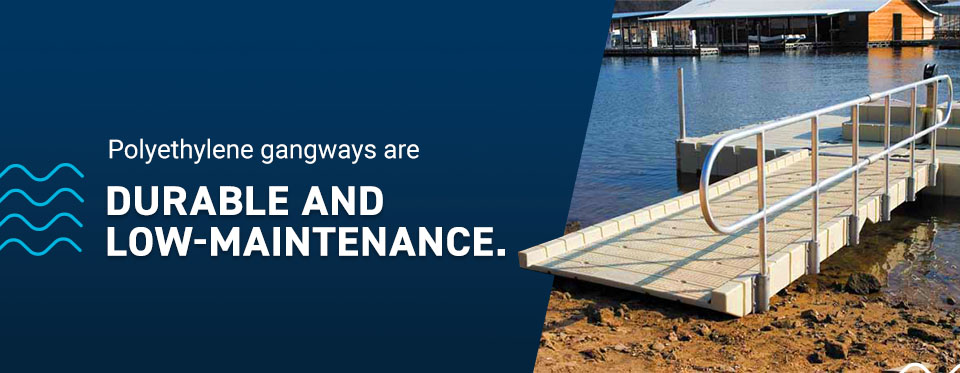
Consider different gangway materials. Marine-grade aluminum gangways offer resistance against corrosion and are strong, durable and lightweight, making them easier to care for. Polyethylene gangways are durable and low-maintenance. They can resist corrosion and damage better than wood gangways that rot and splinter quickly. Wood gangways require constant maintenance and repairs, meaning they only work for smaller and less frequently used properties.
What Precautions Should I Take When Anchoring Floating Docks?
Ensure the safety and security of floating docks by taking the following precautions:
- Always install the anchors downstream or in a position that doesn’t obstruct water traffic. This ensures the dock doesn’t move out of place due to fluctuating water levels.
- Adhere to safety guidelines when handling and operating dock winches.
- Install proper lighting on your floating dock to prevent accidents and deter intruders.
- Use dock bumpers and edging solutions to protect your boat and dock from preventable damage caused by surges in waves and currents.
What Maintenance Is Required for Dock Anchors?
Conduct regular maintenance, repairs and replacements when necessary to prevent your floating dock’s stability and security from being compromised. Thoroughly inspect all anchor components at the beginning and end of each season, whether you leave your dock in the water over the winter or not.
Make seasonal adjustments to modify the dock’s anchoring system to ensure it remains secure with changing water levels and weather conditions. For example, if the water freezes in your area, you’ll want to remove or adjust your anchors and floating dock to prevent ice damage. You may also want to adjust or reinforce your anchors when storms, hurricanes or other severe weather is expected.
How Much Value Does a Boat Dock Add to a Home?
A well-maintained boat dock made of reliable materials can add significant value to your home or property. One of the main benefits of a boat dock is that it will increase your home’s value by several thousand dollars. Your home can be highly sought after in the marketplace and sell much faster once it’s time to find a new owner. Adding a floating dock to your waterfront increases property value by providing a convenient and secure place for your potential buyers to store their water vessels.
A floating dock also adds visual interest to your waterfront property and provides a natural place to entertain family and friends. However, to maintain the value of your boat dock, you must regularly inspect your dock and boat for signs of damage and wear and tear.
Why Choose EZ Dock for Floating Boat Docks?
At EZ Dock, we pride ourselves on floating dock quality you won’t find anywhere else. Since 1991, we’ve developed attractive, environmentally friendly and practical dock systems. Rather than cookie-cutter options that result in splinters, peeling paint and rotted wood, our patented products and designs are long-term investments.
We create versatile, customizable solutions for our clients, whether you need a lightweight yet durable floating dock that can withstand the toughest tropical storms or a multiple-boat marina. From kayakers to PWC owners, we cater to a range of residential, government and commercial clients. We’re an industry leader and your go-to resource for floating docks tailored to your needs.
Find the Right Floating Boat Dock With EZ Dock
EZ Dock provides boat enthusiasts with secure dock sections made of polyethylene. If you want reliable and slip-resistant docking material, we offer low-maintenance solutions for any body of water.
Whether you need a dock for shallow, deep or lake water, EZ Dock gives you a docking system that adapts to changing water levels and retains its strength throughout the years. Contact us today to speak to a representative, or call us at 833-352-1364.