Filtres
Comment ancrer un quai flottant
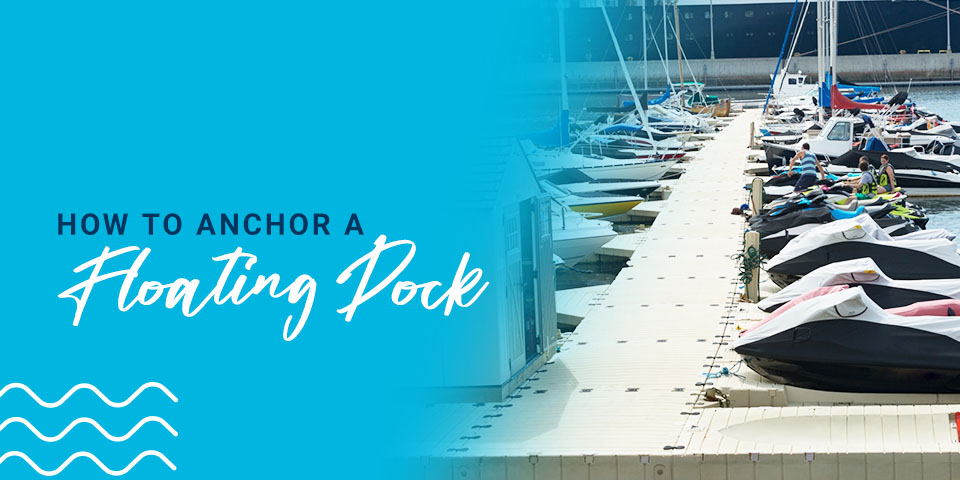
L’ancrage au quai est essentiel pour garder vos navires et quais en bon état plus longtemps. Explorer les types d’ancres les plus courants et comment les installer dans différentes eaux vous aidera à vous assurer d’obtenir le bon type d’ancre et à simplifier le processus d’installation. Un ancrage correct de votre quai le protège du vent, des vagues et des variations du niveau d’eau. Voici quelques questions fréquentes sur l’ancrage aux quais pour répondre à vos nombreuses questions sur les meilleures pratiques et conseils.
Quels types d’ancres de quai existe-t-il?
Les ancres de quai facilitent la fixation de votre quai à différents niveaux d’eau. Que vous envisagiez d’ajouter un quai à bateau dans une zone peu profonde ou dans une eau profonde d’un lac, vous voudrez trouver une ancre appropriée qui répond à vos besoins.
1. Systèmes d’ancrage de quai de câbles
L’ancrage par câble est l’une des méthodes les plus courantes et abordables. Dans les eaux peu profondes, une ancre à câble attache le quai à des poids ou au rivage, mais elle est le plus souvent utilisée dans des applications en eaux profondes avec des fluctuations fréquentes du niveau de l’eau. Dans ces applications, les systèmes d’ancrage par câble utilisent des câbles solides et des cordes attachés directement au fond marin. Ils longent les bords et les coins des quais flottants pour les maintenir en place.
La plupart des passionnés de bateaux apprécient les ancres à câble pour leur mobilité flexible. En s’éloignant ou en s’approchant du rivage, les ancres à câble peuvent s’adapter à la météo, à la saison ou au niveau d’eau actuel. Ce système peut être combiné avec d’autres systèmes d’ancrage pour sécuriser les quais flottants. Les ancres à câble sont aussi un excellent choix dans les conditions suivantes :
- Fluctuations de l’eau : Les changements de niveau d’eau ou les conditions météorologiques fluctuantes affectent le niveau d’eau.
- Vents forts : Les vents violents peuvent affecter les conditions de l’eau ou la capacité de l’ancre à rester en place.
- Charges de vagues : Si l’eau sur le rivage, l’océan ou le lac subit de fortes charges de vagues, cela peut affecter la stabilité du quai.
- Applications de câbles multiples : Plusieurs câbles peuvent être utilisés pour fixer l’ancre à la rive et améliorer la sécurité et la durabilité.
2. Ancrage du poteau et du manchon
Les ancres à poteaux et manchons peuvent aider dans les zones venteuses qui peuvent subir de hautes vagues. Ils consistent en des manchons verticaux durables, souvent en acier galvanisé, reliés au quai. L’installation des ancrages pour poteaux et manchons consiste à insérer les poteaux à travers les manchons et à les fixer au lit d’eau. Beaucoup utilisent un système de câble ou de treuil pour faciliter le retrait et maintenir le quai en place lors des vents forts ou des vagues extrêmes.
Utiliser une ancre à perche et à manchon est bénéfique pour les zones qui peuvent recevoir des vents et des vagues, mais qui ont un fond d’eau stable et non trop rocheux. Avec une connexion à manchon durable et des poteaux en acier, l’ancre de quai pour bateaux augmente la flexibilité et peut se déplacer selon les niveaux d’eau ou les saisons météorologiques. Le système d’ancrage à perche et manchon garde votre quai stable tout en lui permettant de monter et descendre selon les fluctuations de l’eau et les variations de saison.
3. Ancrage des pieux
Les ancres à pieux sont aussi des supports verticaux fixés au fond d’eau, mais ils sont plus grands et plus permanents que les poteaux. Les pieux sont souvent faits d’acier, de béton, de bois ou de fibre de verre. Le quai s’attache aux pieux à l’aide de supports, de rouleaux ou de glissières à pieux qui empêchent le quai de se balancer tout en lui permettant de monter et descendre. L’ancrage sur pieux peut stabiliser les quais transportant de nombreuses personnes, des fournitures lourdes ou des objets de navigation.
Les pieux sont enfoncés profondément dans la surface, ce qui signifie que vous ne pouvez pas déplacer votre quai lors des fluctuations saisonnières de l’eau. Cela signifie que l’installation doit être réalisée par des professionnels qui s’assurent que les ancrages sur pieux sont correctement installés avant l’arrivée de l’hiver. Cependant, les ancrages sur pieux sont un excellent ajout pour les quais qui ont besoin d’une meilleure stabilité lors de variations de niveau d’eau ou de vent.
4. Ancrage du bras rigide
Les ancres à bras rigide sont des bras rigides, généralement faits d’aluminium ou d’acier, qui relient un quai flottant directement au rivage ou à un point fixe, comme un poteau ou une digue. Les bras maintiennent le quai en place et l’empêchent de s’éloigner ou de se balancer.
Ces ancres utilisent un treuil ou un système de câbles, ce qui permet d’amener le quai plus près du rivage ou de le laisser flotter plus loin. Beaucoup de systèmes ont au moins deux bras renforcés pour fixer le quai flottant au rivage. Souvent, les câbles sont placés en diagonale entre les bras renforcés, tandis que la passerelle fixée sert de jambe au système.
Les bras assurent la stabilité et empêchent le quai de se balancer, ce qui le rend idéal pour toute activité aquatique récréative et les espaces de divertissement en bord de mer. Ils permettent aussi aux plaisanciers de transporter des charges lourdes entre le rivage et le quai ou de transporter de nombreuses personnes.
Beaucoup de plaisanciers apprécient à quel point un système d’ancrage à bras rigide peut être abordable. Ils conviennent surtout aux quais flottants près du rivage et aux zones qui ne subissent pas de fluctuations de niveau d’eau ni de vagues importantes.
Comment choisir un système d’ancre pour quai de bateau
Le choix d’un système d’ancrage flottant dépend de différents facteurs dans votre environnement. Voici les principales considérations lors de l’achat d’ancres de quai :
- Profondeur de l’eau : Plus l’eau est profonde, plus l’ancre est lourde.
- Plage de poids : Assurez-vous que votre ancre est assez lourde pour supporter le poids du quai.
- Pouvoir de retenue de l’ancre : Le matériau de l’ancre détermine son pouvoir de retenue.
- Distance entre le quai et le rivage : Plus votre quai est éloigné du rivage, plus vous aurez de chances de devoir mouiller au fond d’eau. Une ancre à bras rigide est moins efficace lorsque le quai est loin du rivage.
- Fluctuations du niveau de l’eau : Un lac calme et peu profond pourrait n’avoir besoin que d’un système d’ancrage simple et relativement léger, tandis que les eaux de marée ou une rivière à forts courants pourraient avoir besoin d’une solution plus robuste pour résister à davantage de changements environnementaux.
- Type de plancher d’eau et conditions du fond : Les fonds souples peuvent ne pas maintenir solidement les poteaux ou les pieux, ce qui rend les ancrages câblés ou de bras rigides une meilleure option.
- Type et taille des navires d’eau : Amarre plusieurs bateaux ou même un seul grand navire exerce plus de force sur le quai, ce qui nécessite une ancre plus lourde.
- Force des vagues et du vent : L’activité des vagues hautes ou des vents nécessite généralement un ancrage plus solide, comme l’ancrage par poteau et manchon. Dans les zones plus abritées, un système d’ancrage à bras rigide peut suffire.
- Taille du quai : Les quais plus grands et plus lourds nécessitent des systèmes d’ancrage plus grands et plus lourds pour assurer la stabilité. Pour les quais plus petits, des systèmes plus légers comme les ancrages à câble peuvent suffire.
- Lois et règlements locaux : Assurez-vous de bien comprendre les règlements locaux et les exigences en matière de permis. Vous ne voulez pas installer un système pour ensuite devoir l’enlever parce qu’il n’est pas conforme.
Heureusement, vous n’avez pas besoin d’acheter un seul type d’ancrage - vous pouvez en obtenir plusieurs, ce qui vous donnera la flexibilité de vous adapter à différentes situations. Vous pouvez utiliser deux types d’ancres dans des situations différentes ou utiliser les deux aux extrémités opposées pour améliorer la sécurité du bateau avec une puissance de maintien supplémentaire.
Comment ancrer des quais flottants
Ancrer un quai flottant est nécessaire pour éviter qu’il ne s’éloigne et n’endommage votre embarcation. C’est plus facile que de réparer des quais permanents, mais cela nécessite des étapes précises lors du processus d’installation. Voici un guide étape par étape pour ancrer votre quai flottant.
1. Rassembler les essentiels d’ancrage
Rassembler vos fournitures essentielles avant de commencer l’installation assure un processus plus rapide et plus facile. Les principales fournitures à avoir sous la main incluent :
- Ancre : De nombreux systèmes d’ancrage de quai incluent des ancrages en béton, qui fournissent le poids nécessaire pour maintenir le quai en place. Votre ancre aide à stabiliser le quai flottant et à le garder en sécurité lors des conditions météorologiques extrêmes ou des jours venteux. Selon la forme ou le poids du quai, certains quais peuvent nécessiter un type spécifique d’ancre.
- Chaînes : Une chaîne galvanisée relie les ancres au quai du bateau et soutient tout le système. Le revêtement galvanisant protège le métal contre la rouille et la corrosion, ce qui le permet de durer plus longtemps sous l’eau.
- Boulons à œil : Les boulons à œil sont des attaches qui se fixent à la tête du maillon rapide de la chaîne et forment un anneau. Les boulons aident à soutenir la structure principale.
- Maillon rapide de chaîne : Aussi appelé maillon maître, il relie la chaîne et les barres d’armure ou la chaîne et les boulons à œil. Cela permet d’ajuster la tension ou la longueur de la chaîne plus facilement que si vous connectiez les chaînes directement aux boulons à œil.
2. Considérez le poids de l’ancre
Assurez-vous de ne pas ajouter plus de poids que nécessaire, mais d’en avoir assez pour sécuriser le quai flottant. Les ancres resteront dans l’eau après leur installation, alors réfléchissez bien à leur poids et à leur emplacement avant de commencer le processus. Votre quai flottant pourrait aussi nécessiter un certain poids aux coins ou un système d’ancrage tous les quelques pieds.
Le poids de l’ancre doit être suffisant pour empêcher le quai de bouger trop, surtout dans les eaux de marée et les zones de vents forts.
3. Déterminer la meilleure disposition d’ancrage
La disposition du système d’ancrage peut affecter la stabilité du quai flottant. Il y a trois facteurs à considérer lors de la mise au point de cet aménagement :
- Disposition croisée : Certains choisissent de placer leurs ancres et chaînes de chaque côté de la plateforme, en croisant les chaînes à travers chaque barre d’armature ou en les attachant à l’œil du coin opposé. Les coins du système d’ancrage se croisent et peuvent contribuer à rendre le système plus durable. Cette disposition peut répartir les forces plus uniformément et augmenter la stabilité du quai.
- Longueur de la chaîne : Certains plaisanciers laissent quelques pouces de matériau supplémentaire pour permettre le mou pendant le processus d’ancrage. Une longueur de chaîne plus courte peut causer des tensions et des contraintes sur la chaîne, ce qui entraîne un quai flottant un peu trop bas dans l’eau. Vous préférerez peut-être même ajuster la longueur de la chaîne au fur et à mesure que le niveau d’eau dans votre région change.
- Cordes de tension de chaîne : Les cordes de tension peuvent mieux convenir aux zones où le niveau d’eau fluctue. Une corde de tension de chaîne d’ancrage offre un peu de mou à votre chaîne et ajoute un peu de tension pour améliorer la stabilité. Les cordes de tension réduisent la contrainte sur le système d’ancrage et le quai de bateau en s’élargissant ou en se contractant avec les variations du niveau d’eau.
Pour la plupart des quais, vous fixerez des ancres à chaque coin du quai, mais il vaut mieux vérifier les recommandations du fabricant. Espacez-les uniformément le long du quai et le long du lit d’eau pour répartir la charge.
4. Installer les ancrages
Pour éviter d’endommager le quai flottant, placez les ancres sur une dalle de bois. Placez quelques ancrages que vous utiliserez ensemble et passez une chaîne à travers les barres d’armature ou les boulons à œil. Assurez-vous d’éviter de couper la chaîne ou de causer trop de tension avec une chaîne courte.
Attachez l’autre extrémité de la chaîne au quai avec un maillon rapide. Soulevez la dalle de bois pour faire glisser les ancres dans l’eau. Les ancres doivent tomber doucement dans l’eau pour éviter trop de stress sur les chaînes ou le système de quai.
Comment puis-je ancrer un quai flottant sur le rivage?
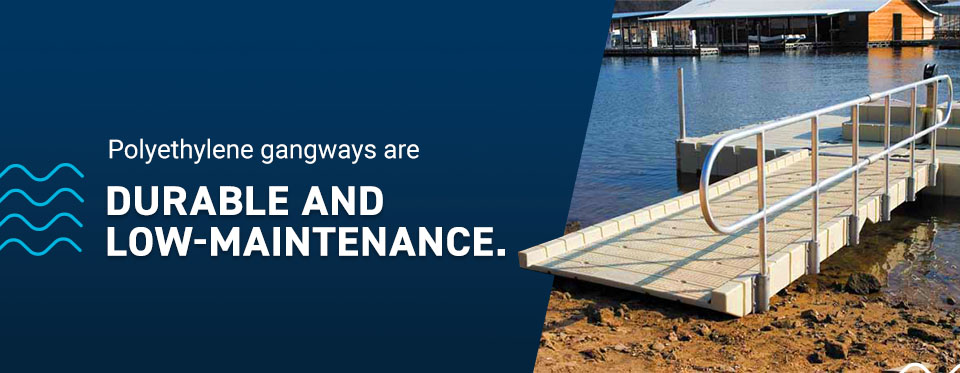
Si vous voulez attacher le quai flottant à un rivage, vous voudrez peut-être investir dans une passerelle. La passerelle peut aider à relier le quai flottant et la rive grâce à une plate-forme prolongée qui permet de couvrir la distance entre la terre et le port. Certaines passerelles sont même équipées de mains courantes pour améliorer la sécurité des quais.
Il existe de nombreuses situations où une passerelle peut être appropriée. Certaines conditions comprennent :
- Eau peu profonde : Les eaux peu profondes près de la rive peuvent vous obliger à placer le quai plus loin de la terre.
- Accessibilité des quais : Vous et d’autres utilisateurs de l’eau pourriez avoir besoin d’un quai plus accessible à partir de points précis sur la terre.
- Transitions de quai : Une passerelle fait la transition entre le quai et le rivage, ce qui facilite et conforte l’accès des bateaux.
Considérez différents matériaux pour les passerelles. Les passerelles en aluminium de qualité marine offrent une résistance à la corrosion et sont solides, durables et légères, ce qui les rend plus faciles à entretenir. Les passerelles en polyéthylène sont durables et nécessitent peu d’entretien. Elles résistent mieux à la corrosion et aux dommages que celles en bois qui pourrissent et s’éclatent rapidement. Les passerelles en bois nécessitent un entretien et des réparations constantes, ce qui signifie qu’elles ne fonctionnent que pour des propriétés plus petites et moins utilisées.
Quelles précautions devrais-je prendre lors de l’ancrage sur des quais flottants?
Assurer la sécurité des quais flottants en prenant les précautions suivantes :
- Installez toujours les ancres en aval ou à un endroit qui ne gêne pas la circulation fluviale. Cela garantit que le quai ne bouge pas à cause des fluctuations du niveau d’eau.
- Respectez les directives de sécurité lors de la manipulation et de l’utilisation des treuils de quai.
- Installez un éclairage approprié sur votre quai flottant pour prévenir les accidents et dissuader les intrus.
- Utilisez des pare-chocs de quai et des solutions de bordure pour protéger votre bateau et votre quai contre les dommages évitables causés par les vagues et les courants.
Quel entretien est nécessaire pour les ancres de quai?
Effectuez un entretien régulier, des réparations et des remplacements au besoin afin d’éviter que la stabilité et la sécurité de votre quai flottant ne soient compromises. Inspectez minutieusement tous les composants de l’ancre au début et à la fin de chaque saison, que vous laissiez votre quai dans l’eau pendant l’hiver ou non.
Effectuez des ajustements saisonniers pour modifier le système d’ancrage du quai afin d’assurer qu’il reste sécurisé face aux variations du niveau d’eau et des conditions météorologiques. Par exemple, si l’eau gèle dans votre région, vous voudrez retirer ou ajuster vos ancres et le quai flottant pour éviter les dommages causés par la glace. Vous pouvez aussi ajuster ou renforcer vos ancres lorsque des tempêtes, des ouragans ou d’autres conditions météorologiques violentes sont prévues.
Quelle valeur un quai de bateau ajoute-t-il à une maison?
Un quai de bateau bien entretenu, fabriqué à partir de matériaux fiables, peut ajouter une valeur significative à votre maison ou à votre propriété. L’un des principaux avantages d’un quai à bateau est qu’il augmentera la valeur de votre maison de plusieurs milliers de dollars. Votre maison peut être très recherchée sur le marché et se vendre beaucoup plus rapidement une fois qu’il sera temps de trouver un nouveau propriétaire. Ajouter un quai flottant à votre bord de mer augmente la valeur de votre propriété en offrant un endroit pratique et sécuritaire pour que vos acheteurs potentiels entreposent leurs embarcations.
Un quai flottant ajoute également un intérêt visuel à votre propriété au bord de l’eau et offre un endroit naturel pour divertir la famille et les amis. Cependant, pour maintenir la valeur de votre quai à bateau, vous devez inspecter régulièrement votre quai et votre bateau pour détecter des signes de dommages et d’usure.
Pourquoi choisir EZ Dock pour les quais flottants?
Chez EZ Dock, nous sommes fiers d’une qualité de quai flottant que vous ne trouverez nulle part ailleurs. Depuis 1991, nous avons développé des systèmes de quais attractifs, respectueux de l’environnement et pratiques. Plutôt que des options standardisées qui causent des échardes, de la peinture qui s’écaille et du bois pourri, nos produits et designs brevetés sont des investissements à long terme.
Nous créons des solutions polyvalentes et personnalisables pour nos clients, que vous ayez besoin d’un quai flottant léger mais durable qui peut résister aux tempêtes tropicales les plus difficiles ou d’une marina à plusieurs bateaux. Des kayakistes aux propriétaires de motomarines, nous répondons aux besoins d’une clientèle résidentielle, gouvernementale et commerciale. Nous sommes un chef de file de l’industrie et votre ressource incontournable pour les quais flottants adaptés à vos besoins.
Trouvez le bon quai flottant pour bateaux avec EZ Dock
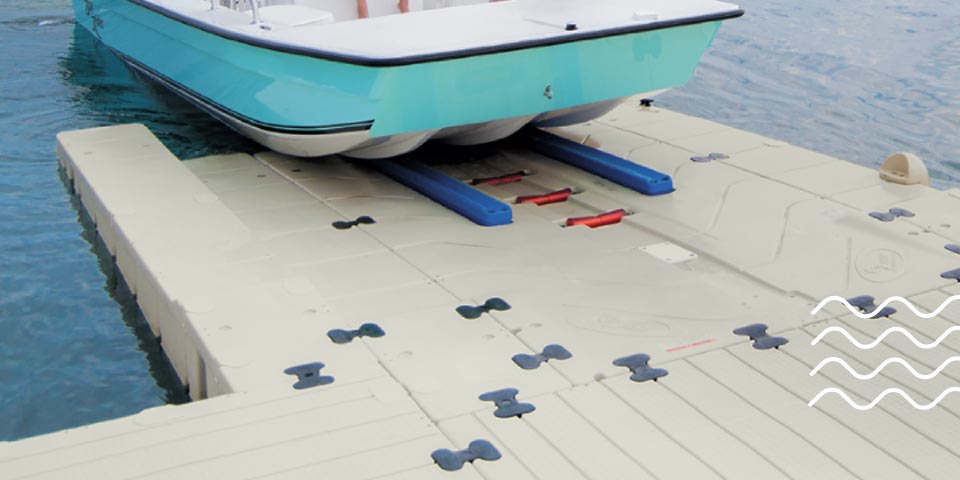
EZ Dock offre aux amateurs de bateaux des sections de quai sécurisées en polyéthylène. Si vous voulez un matériau d’amarrage fiable et antidérapant, nous offrons des solutions nécessitant peu d’entretien pour tous les plans d’eau.
Que vous ayez besoin d’un quai pour les eaux peu profondes, profondes ou lacustres, EZ Dock vous offre un système d’amarrage qui s’adapte aux changements de niveau d’eau et conserve sa résistance au fil des ans. Contactez-nous dès aujourd’hui pour parler à un représentant ou appelez-nous au 833-352-1364.