Filters
Comprehensive Guide to Floating Docks vs. Aluminum Docks
A dock is an investment that lets you maximize your waterfront. Its material shapes factors like long‑term durability and total cost of ownership. Comparing floating and aluminum docks through the lens of maintenance and longevity will help you make a decision that leads to decades of laid-back relaxation.
When you understand the strengths and trade‑offs of each option, you can choose the solution that fits your lifestyle, protects your property and delivers the best long‑term value. This guide explains how the two materials stack up.
The Core Differences Between Aluminum Docks and Floating Docks
Aluminum docking systems have rigid metal frames embedded in the ground beneath the water. They resist water movement instead of adapting to it. This design philosophy can make them more comfortable for some people to use, but it also creates stress points throughout the frame. When water gets choppy and wind speeds rise, the frame may not be able to handle it, especially after months of weathering.
The aluminum frame absorbs heat, making it uncomfortable to use in the summer, when you want to be on the water as much as possible. Additionally, some people think the aluminum’s glare and industrial look are unappealing.
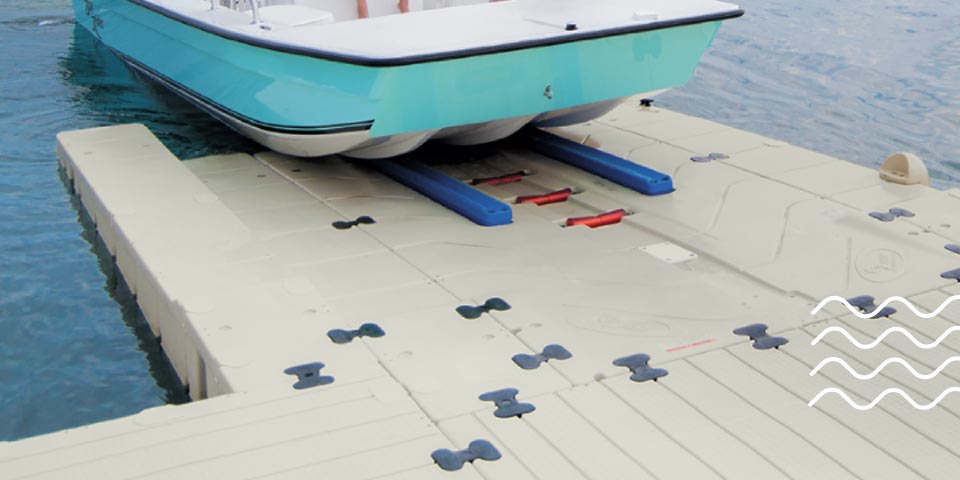
Floating docking systems consist of modular polyethylene components that allow them to move with the waves instead of fighting them. They often have a longer lifespan as a result. They naturally disperse heat and minimize glare, making them more comfortable for everyone. Many waterfront property owners find floating docks’ naturalistic colors more aesthetically appealing because they complement the shoreline instead of standing out.
Is It Easier to Install Aluminum or Floating Docks?
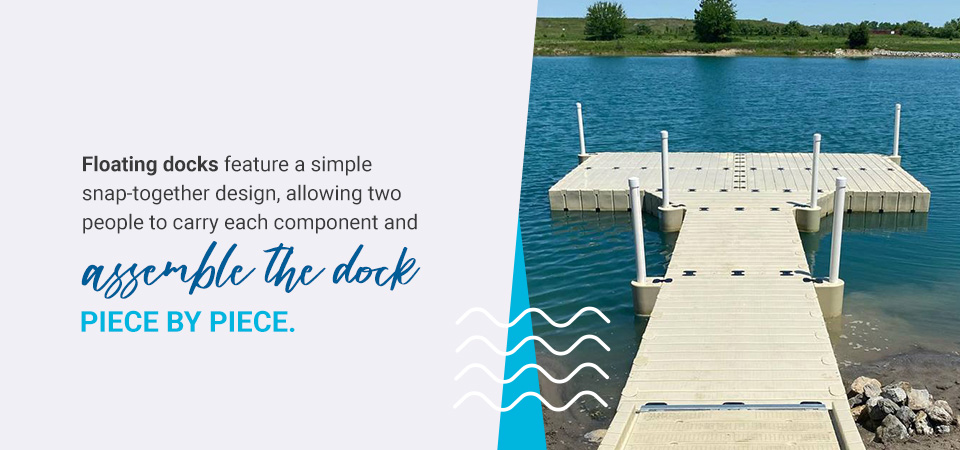
Floating docks feature a simple snap-together design, allowing two people to carry each component and assemble the dock piece by piece. You won’t need to rent heavy equipment or hire an installation crew. You can even reconfigure their design if you upgrade your boat or want a new look.
Aluminum docks are less straightforward. Their metal frames require you to follow complex bolting instructions. You may also need heavy machinery to place each part of the frame, which often means hiring professionals who have the appropriate tools and techniques. These costs aren’t necessarily a one-time deal, either. If you live in an area that sees a lot of ice in winter, you may have to disassemble and reinstall your dock annually to prevent it from freezing.
Which Dock Material Is Safer?
Aluminum and floating docks are generally safe to use for boating, fishing, swimming and other waterfront activities. However, some features of metal docks are deal-breakers for conscientious dock owners.
Aluminum docks often have exposed bolts and screws, which can be an injury hazard. Their sharp corners are potentially dangerous for swimmers climbing in and out of the water. They can scrape boat hulls that get too close. The dock’s surface may also become dangerously hot in the summer, making it unsafe for pets and people.
Floating docks don’t experience any of these issues. They eliminate the need for screws and bolts, which makes them safer. They’re also better able to cope with extreme temperatures because polyethylene is an insulator, not a conductor. It doesn’t absorb or transfer heat easily, keeping pets, kids and everyone else comfortable throughout the year.
Floating docks are the clear winner if you base your decision solely on safety issues.
Maintenance Needs
Floating docks are significantly easier to maintain. Polyethylene resists corrosion and does not oxidize like aluminum. It also does not need sanding, painting or sealing. All you need to do is wash it periodically.
Aluminum docks require more elbow grease. It takes a long time for them to corrode, but saltwater will eventually make the aluminum become chalky and pitted. The frame can also oxidize over time, weakening the dock. To prevent these issues, you must regularly sweep your dock and scrub it with a mild-strength cleaner.
Pros and Cons of Floating vs. Aluminum Docks
Review the list below and consider which traits you want your dream dock to have.
| Floating Docks | Aluminum Docks | |
|---|---|---|
| Appearance | Sleek and modern, with natural colors | Bulky and metallic, with limited color options |
| Installation Requirements | Couplers and a team of two | Frames, bolts, screws, an installation crew and heavy equipment |
| Customizability | Highly customizable, thanks to modular components | Limited customizability — it is challenging to uninstall, move or alter the frame without a crew or the necessary equipment |
| Safety | Stable, durable, adaptable and remains cool to the touch | Stable and durable, but is stiff and can get hot in the summer |
| Noise | Minimizes noise, as there is no frame | Can create a loud “gong” sound when waves slap against the hollow frame |
| Maintenance Needs | Requires a wash-down periodically | Requires regular sweeping and scrubbing to keep clean and avoid corrosion |
| Longevity | Can last decades with minimal maintenance | Can last a few decades with regular upkeep |
| Cost | Higher installation costs, but a lower total cost of ownership | Lower installation costs, but a higher total cost of ownership |
Why EZ Dock Is the Best Investment for Waterfront Living
Floating docks are an excellent investment for your property and family. Installing a dock can significantly increase your home’s value, especially if you take care of it properly. Its longevity may make it a generational asset, providing value to your kids and even grandkids.
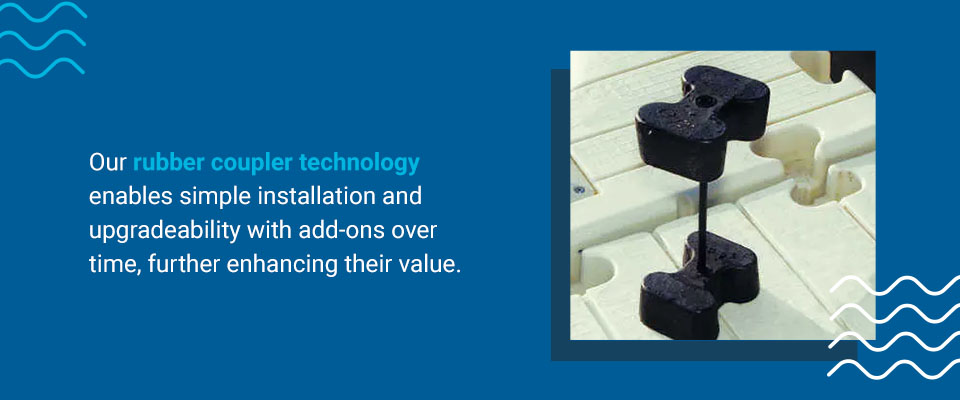
Get the dock your family deserves from EZ Dock. Our rubber coupler technology enables simple installation and upgradeability with add-ons over time, further enhancing their value. And even better? It’s all straightforward and inexpensive to maintain.
EZ Dock has transformed waterfronts nationwide for three decades. Our modular approach to docking gives waterfront property owners newfound flexibility and comfort. Each component is foam-free and features extra-thick walls to ensure strength and stability. We make our products from recycled materials to minimize our environmental impact and maximize your dock’s lifespan. They even come with a 10-year warranty!
Request a quote online today or call 855-490-0323.