Filters
Floating Docks vs. Fixed Docks

A dock is a long-term investment that impacts your family’s enjoyment of your waterfront property. If you’re comparing floating and fixed docks, you’re likely considering factors like durability, accessibility, maintenance needs, installation complexity and how each system handles changing water conditions.
By the end of this guide, you’ll understand which dock system matches your shoreline conditions and lifestyle goals. You’ll also discover how modular floating dock systems combine the best features of both types without the drawbacks.
The Differences Between Floating vs. Stationary Docks
These two dock types are fundamentally distinct in design and function.
Fixed Docks
Also called stationary docks, these permanent structures rest on pilings driven deep into the seabed, lake or riverbed. The pilings are usually pressure-treated wood, galvanized steel or concrete. Once installed, the dock platform remains at a constant height above the waterline regardless of tides, storms or seasonal water-level changes. This rigid design makes stationary docks best suited for locations with deep, stable water and minimal fluctuation.
Floating Docks
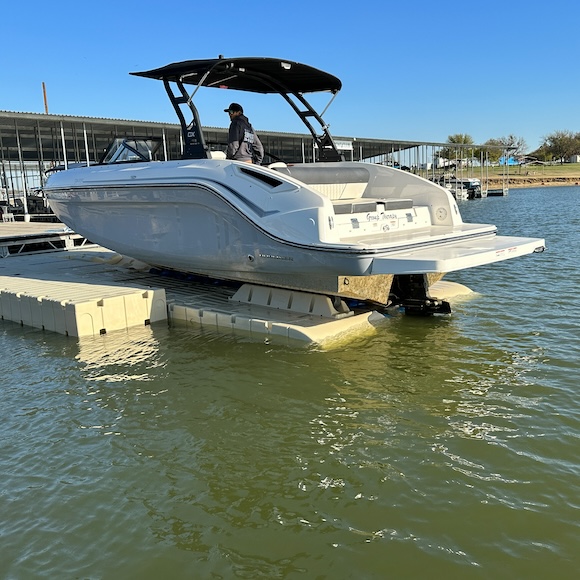
Rather than relying on underwater pilings for support, floating docks use air-filled chambers or foam-filled pontoons to maintain buoyancy. While they naturally move vertically in response to changing water levels, anchoring them to the shore or seabed prevents excessive horizontal drift.
The distinction between floating and fixed docks lies in permanence versus adaptability. Stationary docks provide a solid, fixed platform that doesn’t move with the water. Floating docks offer a stable surface that moves with the water, adjusting to fluctuations without requiring manual intervention.
The Stationary Dock Challenge
When water levels drop significantly, a fixed dock can become dangerously high above the water. Boarding a boat might require climbing down a steep ladder or awkward steps. For families with young children or older adults, this creates accessibility issues and potential risks. Conversely, stationary docks can become partially or fully submerged when water levels rise during storms or spring floods.
The Floating Advantage
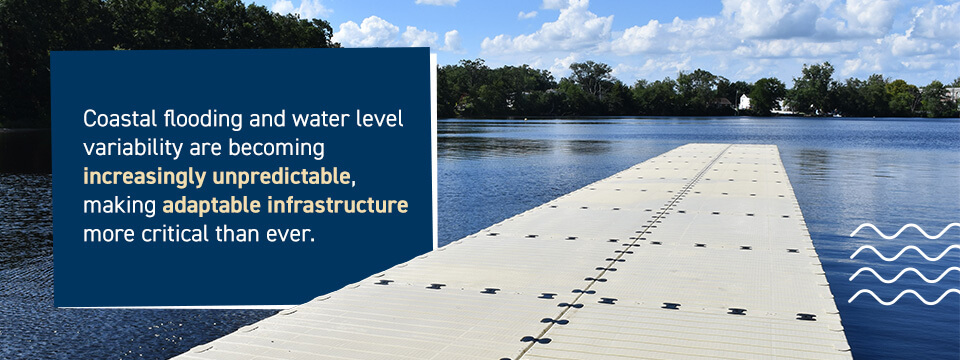
Floating docks maintain a constant freeboard height relative to the water’s surface, so the distance between your dock and your boat stays consistent regardless of rising or falling water levels. Boarding is equally accessible for children, adults and seniors at any time. This consistency is one reason solutions for fluctuating water levels are popular among waterfront property owners dealing with unpredictable conditions.
Factor 2: Installation Complexity and Permits
Installing either dock type requires familiarity with regulatory requirements and the time investment involved.
Fixed Dock Reality
Stationary dock installation requires heavy equipment. Pile drivers must push pilings deep enough into the seabed to support the platform’s weight and resist horizontal forces from waves and currents. Installation can take a week or more.
Stationary docks involve permanent alterations to the lake or seabed and may sit on state-owned bottomlands, which often leads to extensive permitting. Government and environmental agencies assess potential impacts on aquatic habitats, navigation channels and neighboring properties, with approval timelines varying from weeks or months.
Floating Dock Simplicity
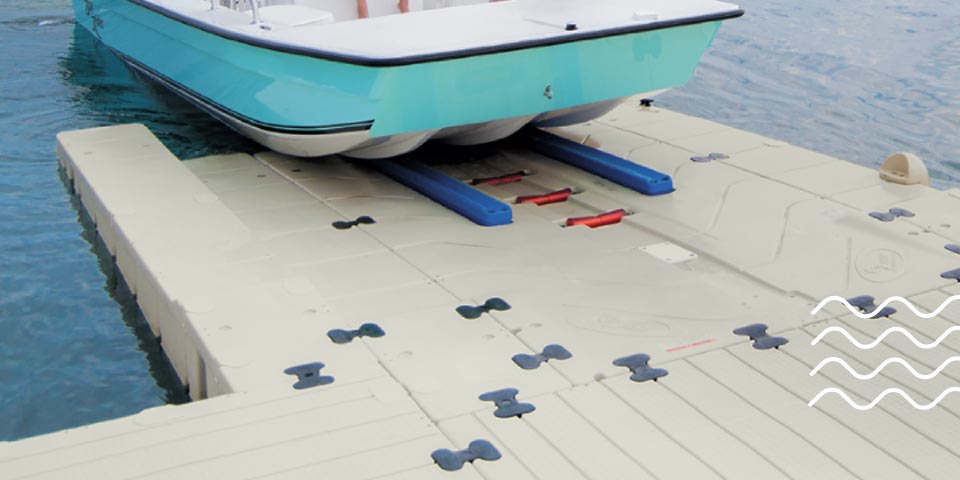
Modular floating dock systems arrive in prefabricated sections that connect using simple coupler systems. Installation usually takes one to two days, depending on the dock’s size and configuration. Because the sections are lightweight yet durable, they don’t need heavy machinery for assembly.
Permitting requirements for floating docks are often less complex because they don’t permanently disturb the lakebed. While you’ll still need to check local regulations, many jurisdictions view floating systems as temporary structures with minimal environmental impact, which can streamline the approval process.
Factor 3: Maintenance and Durability
Maintenance is a significant factor separating fixed docks from floating docks, and your long‑term budgeting should reflect that.
The Fixed Cost of Wood
Stationary docks can last decades with proper maintenance, but neglecting upkeep can lead to repairs or a full replacement years earlier than necessary. UV exposure, humidity and saltwater accelerate wear and affect wooden dock lifespans. Owners must regularly inspect for loose fasteners, apply sealants or stains annually and deep-clean the surface to prevent mold and algae growth. Beyond the labor of scrubbing and staining, the cumulative cost of sealants and replacement lumber for rotting planks can add up.
Fixed docks’ permanent underwater structures routinely encounter harsh conditions. Ice movement during winter months can damage pilings in northern climates, while saltwater accelerates the corrosion of metal components in coastal installations.
The Polyethylene Solution
Modern floating docks constructed from high-density polyethylene eliminate maintenance concerns. HDPE materials exposed to marine conditions for extended periods maintain structural integrity and tensile strength even after decades of exposure to saltwater, UV radiation and temperature fluctuations.
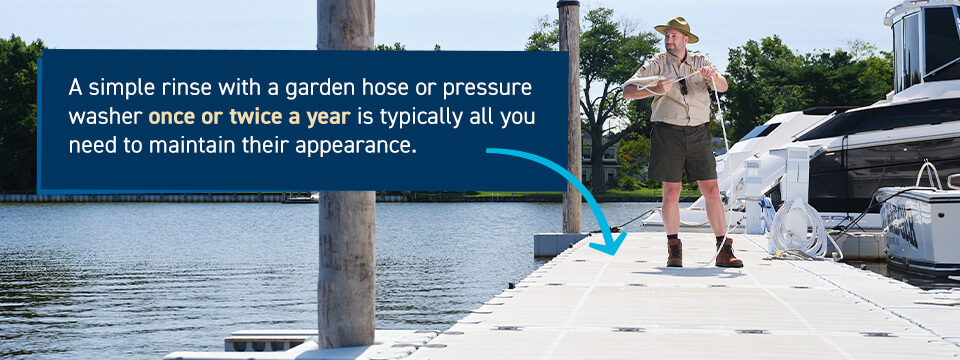
Polyethylene docks do not rot, splinter or require painting. They won’t rust like metal components or crack like concrete. A simple rinse with a garden hose or pressure washer once or twice a year is typically all you need to maintain their appearance. You can remove or relocate floating docks if the forecast calls for frigid temperatures or other severe weather, providing an extra layer of protection.
Factor 4: Stability and Surface Comfort
There’s a widespread misconception that floating docks are wobbly compared to stationary structures. However, modern floating docks use engineered flotation chambers that create a low center of gravity and suction against the water’s surface. This design delivers remarkable stability, often rivaling fixed piers, while offering superior accessibility.
Because the dock maintains a consistent height relative to the water, boarding a boat is always a level step — eliminating the awkward climbs required on stationary docks when water levels drop.
Surface comfort is another area where floating systems outshine traditional wood or metal fixed docks. Wood decks splinter over time and rely on nails that can work loose, while metal surfaces can become scorching hot in the summer sun.
In contrast, polyethylene floating docks are barefoot-friendly by design, with surfaces that stay cooler and never splinter. The absence of exposed fasteners makes them comfortable for children and pets, allowing families to enjoy the waterfront without worrying about minor injuries or uncomfortable footing.
Which Dock Works Better for Your Shoreline?
After reviewing performance factors, here’s how to decide which system matches your situation.
Choose a fixed dock if:
-
Your waterfront has deep water with no seasonal fluctuation
-
You need to support very heavy commercial vessels or ship traffic
-
Local regulations or historic preservation requirements mandate permanent structures
-
Your water body never experiences significant tides, floods or drought conditions
Choose a floating dock if you:
-
Deal with tides, seasonal water level changes or unpredictable fluctuations
-
Want a system that can grow or reconfigure as your needs change
-
Prioritize low-maintenance, barefoot-friendly surfaces
-
Need quick installation without lengthy permitting delays
-
Value the ability to remove your dock before winter ice or severe storms
Most residential waterfront owners and many commercial operations favor floating docks due to their adaptability, lower lifetime costs and installation simplicity.
The Best-of-Both-Worlds EZ Dock Advantage
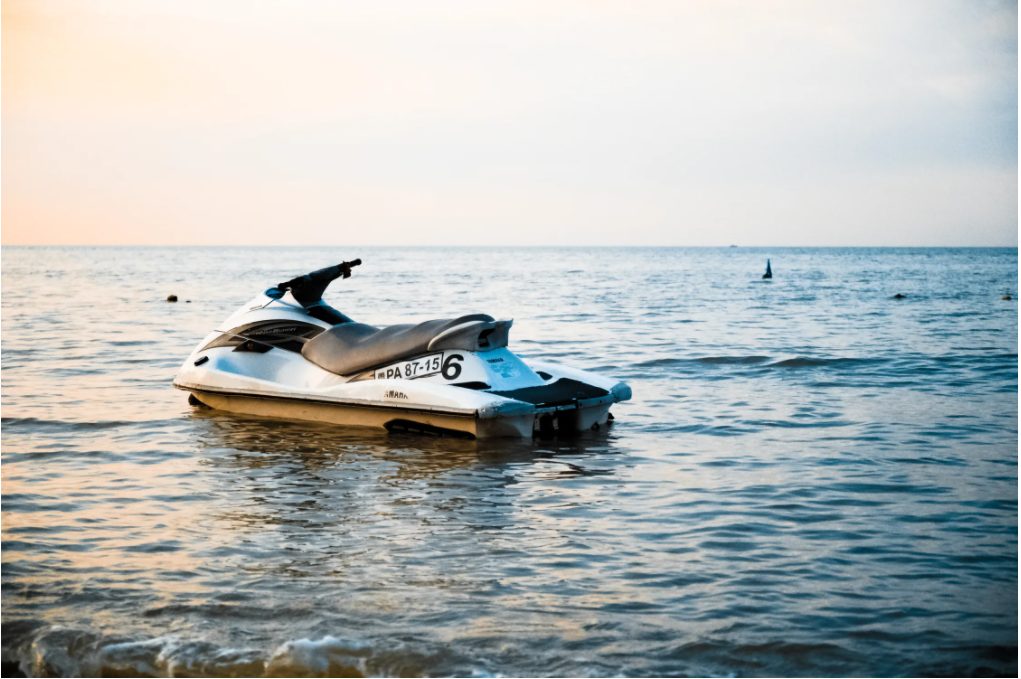
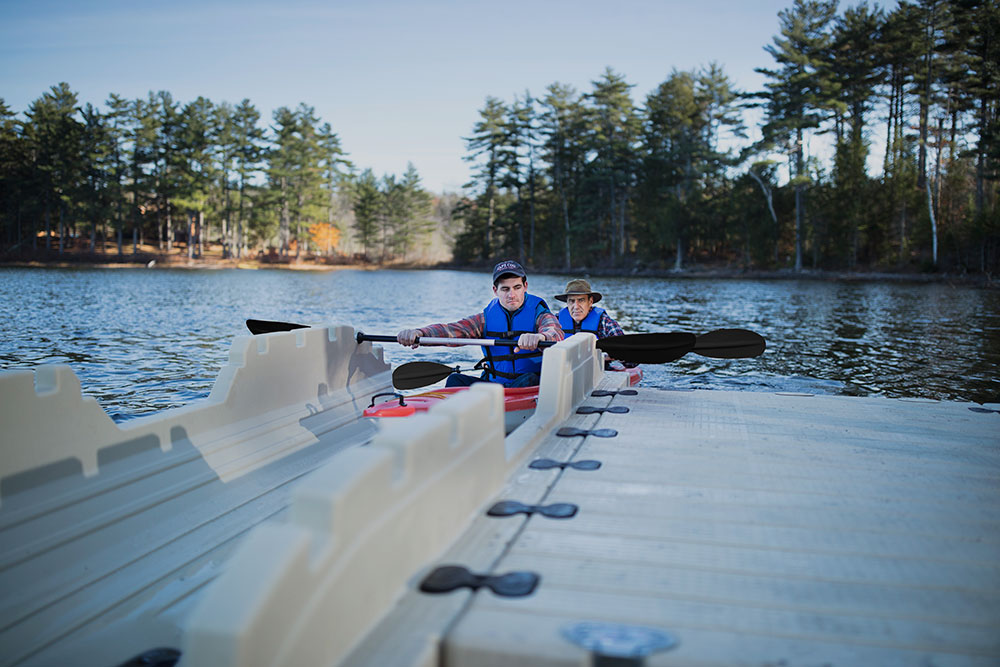
EZ Dock has engineered floating dock systems that deliver the stability and adaptability waterfront owners expect. Our modular approach means you can start with a basic configuration and add versatile configurations like personal watercraft ports, kayak launches or swim platforms as your family’s needs change.
The polyethylene construction used in EZ Dock systems offers exceptional durability without the environmental concerns associated with chemically treated wood. These docks last for decades with virtually no maintenance, so you can spend less time on upkeep and more time enjoying your waterfront.
Contact an EZ Dock distributor to explore which configuration works for your property and design your perfect waterfront setup.