Filters
How Do Weather Conditions Affect the Lifespan of Your Dock?
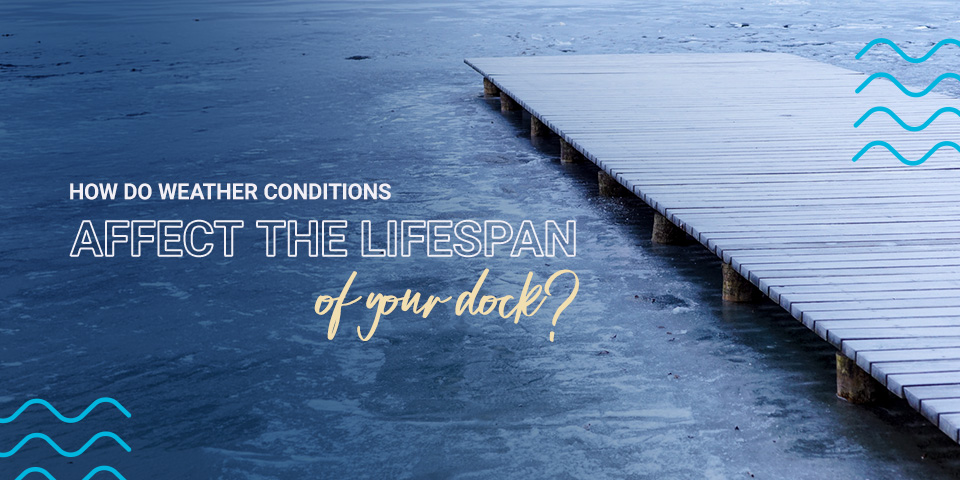
Your dock is an investment in your waterfront lifestyle. Understanding how weather affects it puts you in control of how quickly it ages. Weather conditions impact wooden, aluminum and steel materials in specific ways. When you know how ultraviolet radiation degrades wood fibers, moisture drives rot and corrosion, wind stresses connections and ice creates internal pressure, you can make better decisions about maintenance schedules and replacement timing.
Sun and Heat
Constant sunlight exposure can degrade wooden docks. Ultraviolet radiation breaks down lignin, a natural polymer that gives wood its rigidity and binds its fibers together. This breakdown leads to a faded, grayish color and causes small surface cracks that grow deeper over time.
Thermal stress adds a second layer of damage. Wood expands when it’s hot and contracts when it’s cold. If one side of a board heats or dries faster than the other, internal stress develops that can cause the wood to twist, cup or split along the grain. These structural changes compromise the integrity of your walking surface and attachment points.
Aluminum and galvanized steel docks also undergo thermal expansion and contraction cycles. Engineers typically design for these movements, but the constant stress still affects fasteners, connections and adjacent materials over years of use.
To mitigate sun and heat degradation, you’ll need to apply a UV-inhibiting sealant or stain to wooden docks every one to two years. Whether you have a wooden, aluminum or steel dock, regularly inspect your dock fasteners to ensure they are not loose.
Humidity and Heavy Rain
Moisture creates some of the most persistent challenges for traditional dock materials. The damage occurs in three distinct ways.
1. Rot and Decay
High ambient humidity causes wood to absorb moisture directly from the air, while rain leads to significant water absorption and swelling throughout the material. Wood never fully dries in heavy rainfall combined with persistent high humidity, creating the ideal conditions for fungal growth and wood-degrading organisms that break down the cellular structure of wood from within.
2. Corrosion
Fasteners on wooden docks corrode more quickly in wet environments. After natural hazard events such as floods, structural failures happen more frequently at connections rather than in framing members themselves. It’s good practice to regularly inspect your fasteners. Also, ensure your fasteners meet the American Society of Civil Engineers 24 standards, which require the use of corrosion-resistant metal connectors and fasteners in coastal areas.
Aluminum naturally resists corrosion, while galvanized steel relies on its zinc coating for rust protection. However, galvanic corrosion presents a different challenge. This electrochemical process occurs when dissimilar metals contact each other in the presence of an electrically conductive liquid, such as saltwater. When this happens, one of the metals will corrode at an accelerated rate. Using standard stainless steel bolts to attach aluminum components in a saltwater environment, for example, can cause the aluminum around the bolts to rapidly degrade.
3. Structural Damage
High water levels from heavy rainfall exert pressure on posts and frames. Strong currents can shift or even lift dock sections, while stormwater also carries debris that may slam into support beams and damage structural components over time.
Wind and Waves
Wind never rests on open water. The relentless force of wind-driven waves produces constant, repetitive stress on a fixed dock’s structure. Bolts, brackets and corner joints absorb the brunt of this constant movement. Additionally, strong gusts can lift wide platforms, creating upward pressure that works against the fasteners and anchoring system.
Professional marina design follows strict engineering standards to calculate wind and wave loads. The ASCE Manual 50 provides detailed calculations for these forces, but even with proper engineering, wind and waves affect your dock’s lifespan and require ongoing attention to maintain structural integrity.
Ice and Cold Temperatures
Freezing conditions attack dock structures through two distinct mechanisms that cause material degradation and, in some cases, structural failure.
Wood Damage
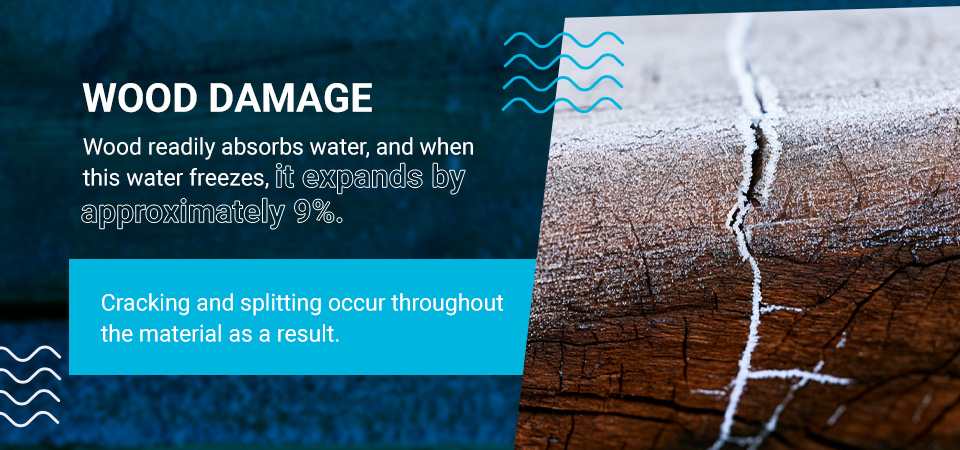
Ice and freezing temperatures can be particularly detrimental to wood docks. Wood readily absorbs water, and when this water freezes, it expands by approximately 9%. This expansion creates immense internal pressure within the wood’s cells and pores.
Cracking and splitting occur throughout the material as a result. Wood layers separate, while the structural integrity of boards and beams diminishes with each freeze-thaw cycle. Moving ice can also scrape wooden surfaces, gradually wearing away material season after season.
Ice Jacking
Wood, aluminum and steel docks are vulnerable to a phenomenon called ice jacking. Ice expands vertically as it freezes, adhering to pilings and physically lifting them out of the seabed or lakebed. This displacement causes significant structural damage to the entire dock system, often requiring expensive repairs or complete replacement.
The Combined Effects of Weather Conditions
Environmental stressors rarely act in isolation, and their synergistic effects often prove far more damaging than the sum of their individual impacts. This compound degradation can significantly shorten a dock’s lifespan.
A 2022 study demonstrated how multiple natural elements accelerate deterioration. Researchers built 189 timber-joint specimens — the kind used in structural connections such as piers and docks. They repeatedly soaked the specimens in seawater, then added UV light on top to simulate outdoor sun conditions.
The results revealed alarming degradation rates. The more cycles of seawater plus UV exposure the wood endured, the weaker the connections became. At 90 cycles, the joints lost up to 53% of their pull-out strength, meaning they could only hold roughly half the load their original design specifications called for.
After prolonged exposure to UV and seawater, the connections failed with no warning. The pairing of weather stressors, such as moisture and UV exposure, creates a compounding effect that traditional materials struggle to withstand over time.
How Modular Floating Docks Stand up to Weather
Modern floating dock systems address each weather-related challenge through engineered material selection and innovative design. Here’s how they resist various weather conditions.
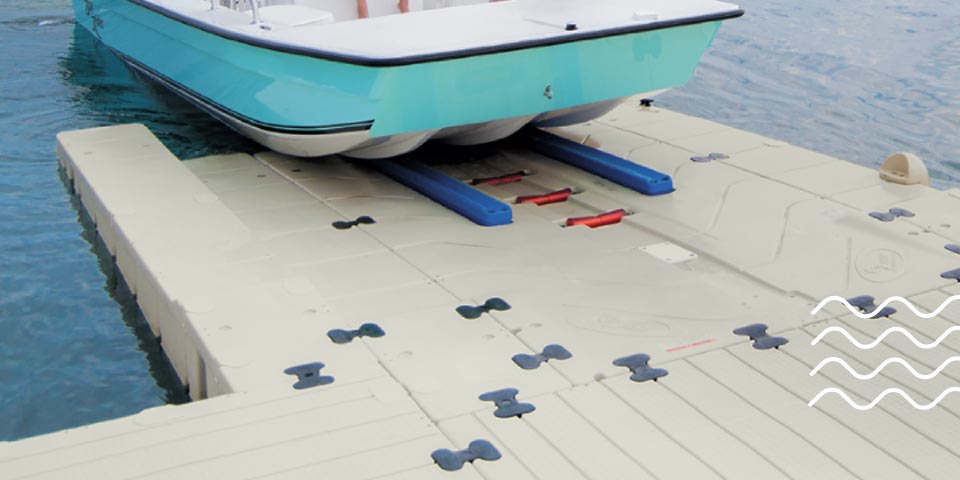
- Sun and heat exposure: Many modular systems use UV-stabilized HDPE plastic that resists fading, cracking and degradation from prolonged exposure to the sun. The material maintains its structural integrity for decades under direct sunlight.
- Flooding and fluctuating water levels: Modular docks float, eliminating the destructive wet-dry cycles that lead to rot, cracking and accelerated material fatigue. The dock surface rises and falls with water levels rather than fighting against them.
- Heavy rain, humidity and water exposure: HDPE is nonporous, which makes floating docks impervious to rot, mold, mildew and swelling caused by heavy rain or persistent high humidity.
- Ice and freezing temperatures: Buoyant docks move vertically with ice, effectively neutralizing the powerful lifting forces that destroy fixed dock pilings. Many modular systems also disassemble easily for seasonal storage, letting you preserve your investment during harsh winter months.
While maintaining a fixed dock requires constant vigilance, especially in harsh conditions, modular floating docks need minimal care over their lifetime. The difference in long-term maintenance reduces time commitment and total cost of ownership.
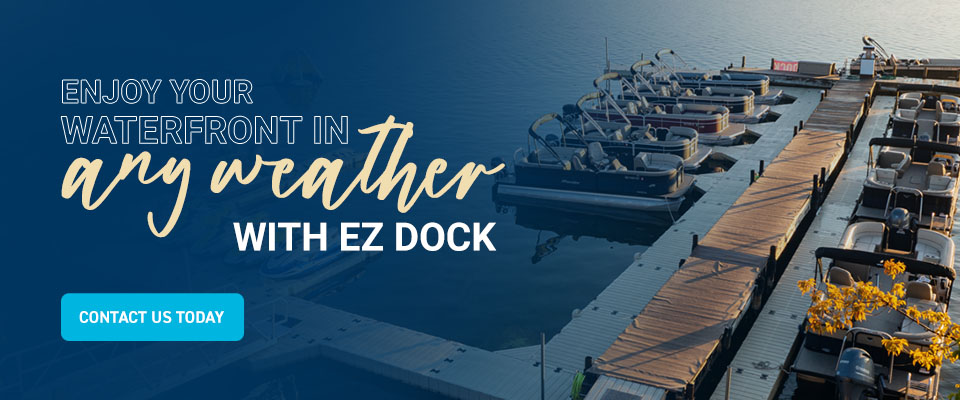
Enjoy Your Waterfront in Any Weather With EZ Dock
Traditional docks wage a constant battle against the elements. EZ Dock’s floating modular system changes the equation entirely. Our marine-grade polyethylene construction resists UV degradation, won’t rot or corrode and moves with water levels instead of fighting them. Enjoy decades of worry-free use with minimal maintenance.
Since 1991, we’ve engineered solutions that let waterfront property owners spend more time enjoying the water and less time repairing their investment. Our modular docks adapt to your shoreline, expand as your needs change and stand up to harsh weather conditions season after season.
Explore our complete floating dock lineup or contact us to discuss custom configurations for your waterfront.