Filters
Floating Docks for Fluctuating Water Levels
When you own property on an ocean, river or even a lake, you’ve probably experienced frequent changes in the water’s level. Several factors impact how water fluctuates, including wind, severe weather, rain and floods, boat traffic, currents, tides and natural formations. For most docks, fluctuating water levels can be problematic.
While you can’t control the water, you can find solutions for dealing with fluctuations — and one of the simplest but most effective options is exploring floating docks for changing water levels.
This guide to floating docks for fluctuating water levels by EZ Dock explains why floating docks are the ideal solution.
Key Takeaways
- Fluctuating water levels can cause problems for docks, such as enhanced corrosion, additional maintenance needs and increased difficulty entering and exiting the water.
- Floating docks can alleviate many of these problems.
- You can customize your floating dock to its intended use.
- The best dock configurations and features will vary from one dock to the next.
Why Are Fluctuating Water Levels Problematic for Docks?
Regardless of what type of water body or conditions it’s placed in, any dock will experience wear and tear from the water. However, fluctuating water levels can pose increased risks for permanent docks built on piles or legs, such as:
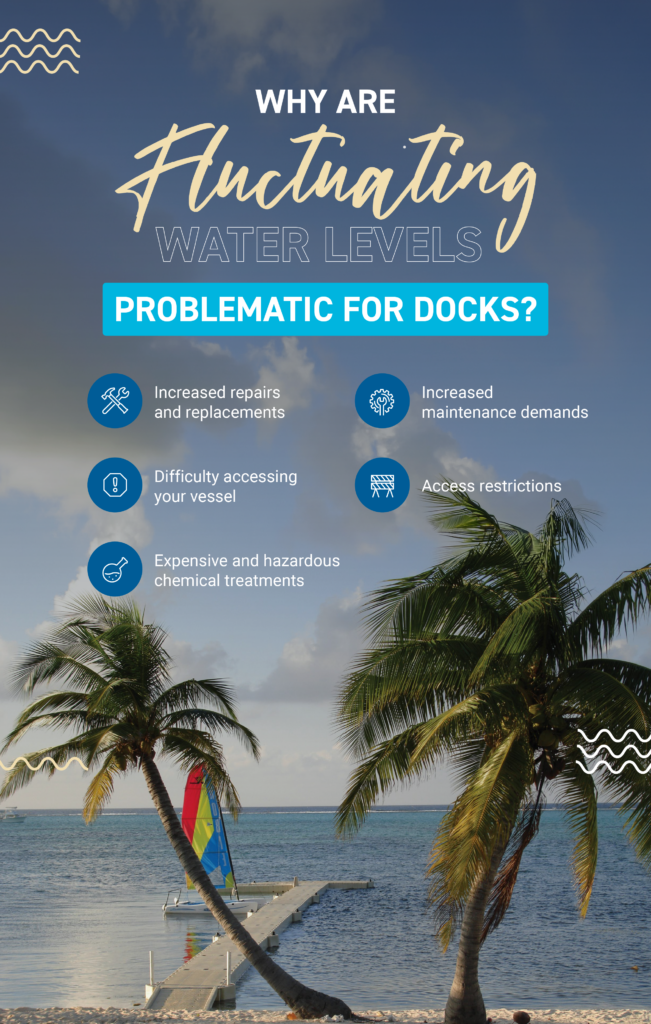
- Increased repairs and replacements: The water’s constant movement slowly wears down building materials, such as wood and concrete. Faster erosion can mean you’ll have to repair the damage or replace the dock sooner than you normally would.
- Difficulty accessing your vessel: Since the level between the dock and your vessel fluctuates, it can be difficult to enter or exit your vessel, especially when the water level is low.
- Increased maintenance demands: Higher water levels can cause increased residue or corrosive salt buildup on your dock, particularly if it becomes fully submerged. Keeping your dock clean may require additional maintenance demands.
- Access restrictions: Your dock may become fully submerged, preventing you from using it.
- Expensive and hazardous chemical treatments: You may need to apply chemical treatments to traditional wooden docks, which can be hazardous to wildlife and costly.
How Floating Docks Handle Fluctuating Water Levels
Filled with air, floating docks sit on top of the water and move with it, unlike traditional docks that are fixed in position regardless of the water level. While some floating docks require barrels or rolling structures underneath the platforms, premium systems float independently.
However, there are other reasons why floating docks are perfectly-suited to water bodies with fluctuating water levels.
Anchoring System
Floating docks can use different types of anchoring systems to prevent horizontal drifting while allowing the dock to move vertically as the water level changes. The dock’s environment, size and local regulations will affect which anchoring system may be best.
Deadweight anchors are a traditional system that relies on weight to anchor your floating dock. A deadweight system attaches heavy concrete or stone blocks to your dock with chains. This method requires heavy equipment, as a floating dock will require multiple anchors weighing several hundred pounds each.
Embedment anchors also attach to your dock with chains, but this system relies on holding power rather than weight. By burrowing into the waterbed, embedment anchors keep your dock in place. This anchoring system is particularly useful when you don’t want to use heavy machinery or when minimal environmental disturbance is required.
Finally, structural anchor systems can vary in their design, with common types including:
-
Piling and hoop systems: Pilings are driven into the water bed and attached to your dock with hoops or brackets. Your dock can then slide up and down these pilings as the water level rises and falls.
-
Pipe and collar systems: Pipes are driven into the water bed rather than the pilings used in the piling and hoop system. Your dock can then slide along these pipes in relation to the water level.
-
Stiff arm systems: These systems anchor your dock to the shore rather than the waterbed. Stiff arms connect your floating dock to a fixed point on shore, which then move vertically to allow your dock to adjust to fluctuating water levels.
Your floating dock’s anchoring system is vital for protecting your dock and preventing it from breaking free, which could endanger anyone nearby and damage any vessels on the water. You could also face financial penalties if your dock breaks free.
Design and Construction
Floating docks are perfectly designed and built to overcome the challenges of fluctuating water levels through their:
- Water-level adaptation: Floating docks rise and fall with the water as it fluctuates, meaning the water level will always be the same in relation to the dock. This adaptation means you’ll be able to access your vessel and your dock more easily, regardless of the water level.
- Slip-resistant surfaces: Floating docks made from slip-resistant materials make it easier to board and disembark from your vessel with a lower risk of slipping, even when the dock is wet.
- Corrosion-resistant materials: Many floating docks don’t require any bolts, nails, screws or other sensitive hardware that could be vulnerable to corrosion. Instead, floating docks use durable and corrosion-resistant materials like polyethylene. These materials don’t require hazardous chemical treatments or extensive maintenance, either. Scrubbing with a brush or using a pressure washer is usually sufficient to remove dirt and algae from a floating dock.
- Easier installation: Premium floating docks with a modular design fit together via a connecting coupler system that keeps them secure while absorbing outside shock. You may be able to install a small floating dock on your own, or a distributor can provide professional installation for peace of mind.
- Versatility: Most high-quality floating docks offer customization options that let you tailor your dock to your specific needs. These customizations can make it easier to access, launch and moor vessels and personal watercraft (PWC) from your floating dock.
Gangways for Shore Access
Besides the dock’s structure and anchoring system, the access method is a key component in how a floating dock combats fluctuating water levels. Acting as a bridge between the fixed shore and the moving dock, gangways on floating docks feature either a hinge, rolling mechanism or sliding mechanism at either end, allowing the gangway to remain stable even as the dock moves.
This flexible connection provides a safe path and is essential in locations with unpredictable water level changes or significant tidal swings.
How to Choose the Right Floating for Your Needs
Floating docks are the ideal solution to fluctuating water levels. However, since floating docks can vary in their design, some docks may be better-suited to your needs than others.
Whether a floating dock is perfect for you will depend on your dock’s:
Environment
The location and environment of your floating dock will affect which dock you get and what features you should add on:
- Lakes and ponds: Lakes and ponds are often calm water bodies, and are usually the most gentle on floating docks. The best docks for lakes that have fluctuating water levels are those with a gangway. Some water levels in lakes and ponds can be shallow, but you can use a gangway to attach the floating dock to the shore and safely install the dock over deeper water.
- Rivers: If you’re installing a floating dock on a river, consider installing safety railings around the edge, particularly if the dock is intended for public use.
- Oceans: Ocean water is salty and corrosive, so floating docks made from corrosion-resistant materials are key. Because ocean currents and waves can get rough, consider a robust anchoring system to keep your floating dock secure during severe weather.
Material and Construction Quality
Your floating dock should be made from high-quality materials that are well-suited to floating docks. The best materials will reduce the maintenance burden and won’t need to be repaired or replaced regularly. Polyethylene is widely regarded as a great material for floating dock construction.
Similarly, your manufacturer should have a reputation for designing and building high-quality floating docks. While you may not be able to view a dock before you buy it, you can research their experience, reputation and customer reviews.
Applicable Building Regulations
Building regulations may not apply to every floating dock. However, always check your local regulations before installing your dock. In many places, homeowner association rules can dictate the location, size and nature of your floating dock, along with any mandatory safety features. In other locations, local building regulations may determine the methods and materials you can use to install your dock. Often, these building regulations are enforced to ensure that any construction projects are safe.
Environmental building regulations could also apply, particularly in areas where protected wildlife can be found.
Intended Use
You should also consider who will use your floating dock. If children or other vulnerable people are likely to use it, you should consider adding railings to reduce the risk of them falling into the water. If your dock is for commercial purposes, you may want a larger dock to accommodate more customers and a configuration that allows more vessels to dock. Ensure your dock meets any insurance requirements, too.
If you have specific activities that you want to enjoy on the water, choose a dock that can accommodate them. If you enjoy taking PWC vessels on the water, add a PWC port, and if you enjoy fishing, you may want to add a fish cleaning station.
How You Can Tailor Your Floating Dock to Your Needs
One of the primary benefits of a floating dock is the freedom you have to customize it to best meet your needs. The two key areas of floating dock customization are in how you configure it and which features you add to it.
Configurations
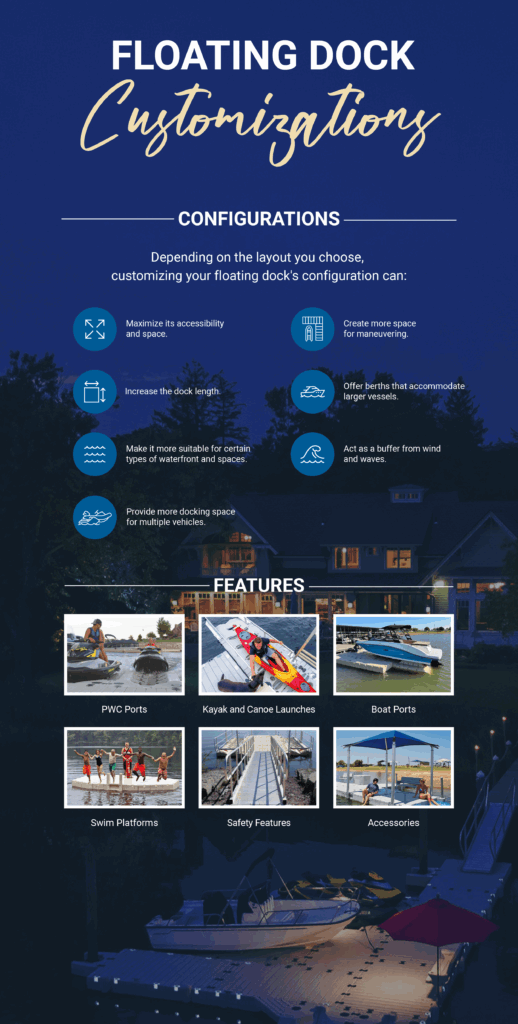
You should tailor your floating dock’s configuration to the dock’s environment and intended use. Depending on the layout you choose, customizing your floating dock’s configuration can:
- Maximize its accessibility and space.
- Increase the dock length.
- Make it more suitable for certain types of waterfront and spaces.
- Provide more docking space for multiple vehicles.
- Create more space for maneuvering.
- Offer berths that accommodate larger vessels.
- Act as a buffer from wind and waves.
These benefits allow you to more easily enjoy your preferred activities and dock your vessels safely. Configurations are often adjustable, too, meaning you can adjust or add to your dock to adapt to your changing needs in the future.
Features
Thanks to their versatile configurations and flexible modular designs, floating docks make it easy to add or remove features as you see fit. Some of the most popular features found in floating docks include:
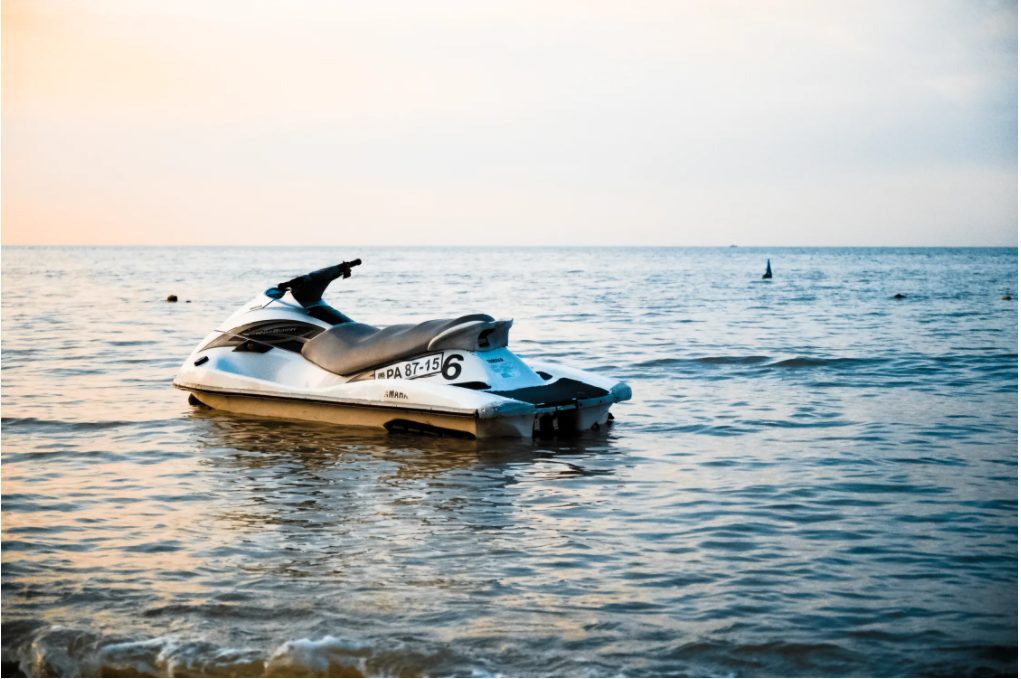
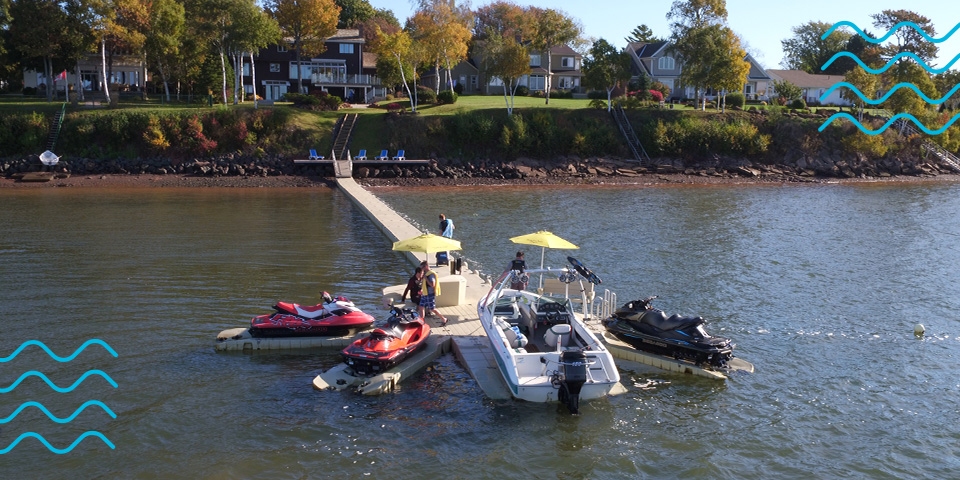
- PWC ports: Designed specifically for PWC, these ports make it easy to dock and store your PWC until you’re ready to use it again.
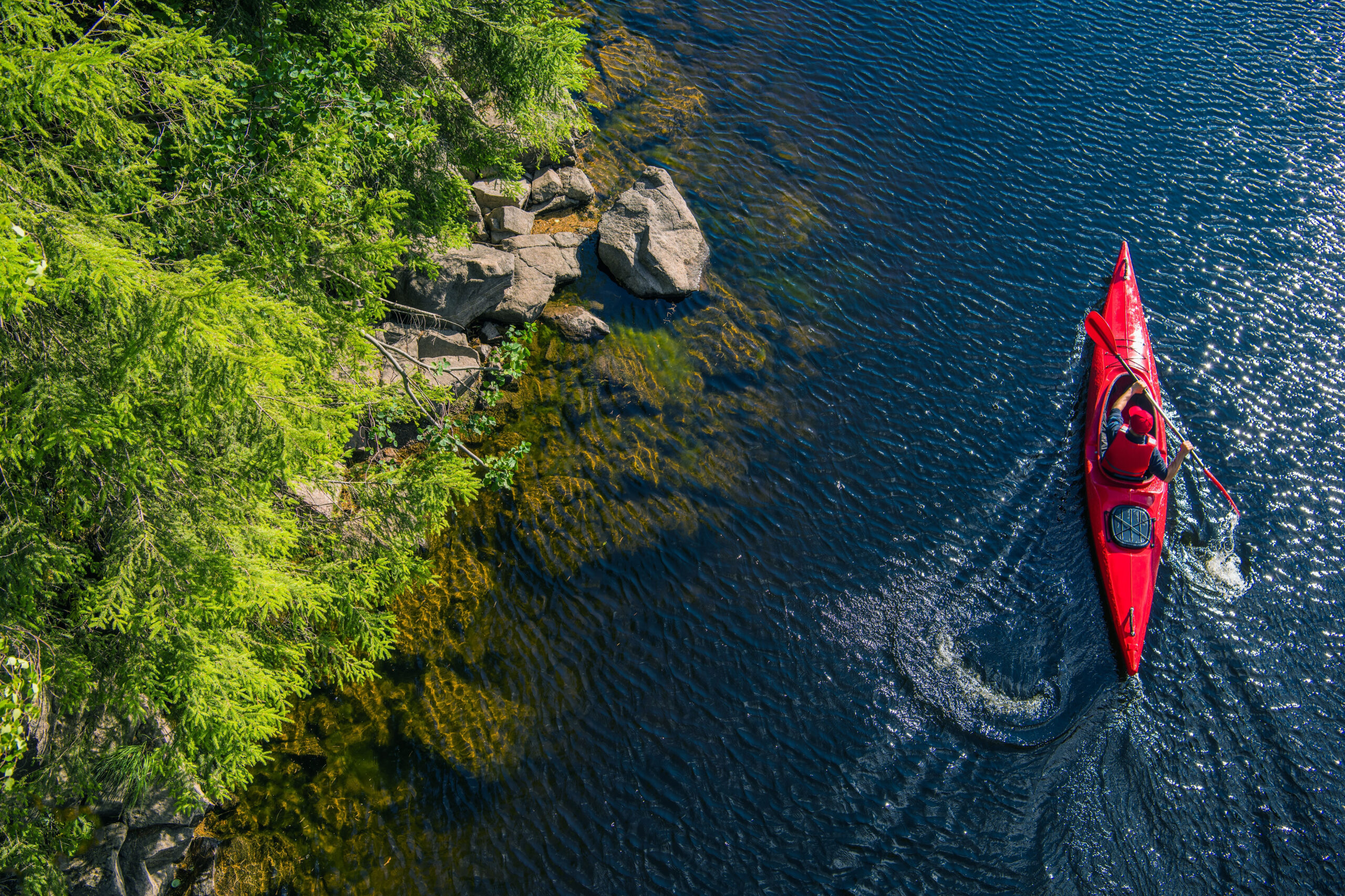
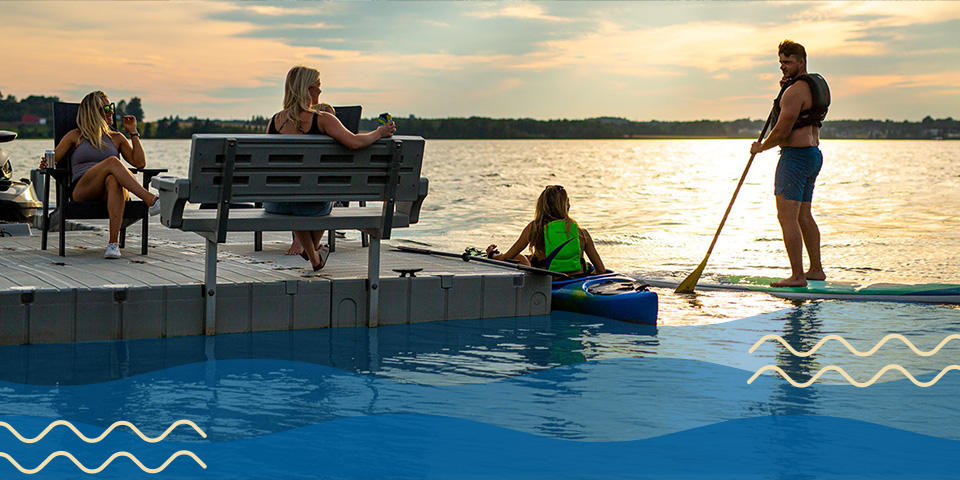
- Kayak and canoe launches: Like PWC ports, kayak and canoe launches provide a tailored docking solution, while also making it easy to board, launch and exit your kayak or canoe.
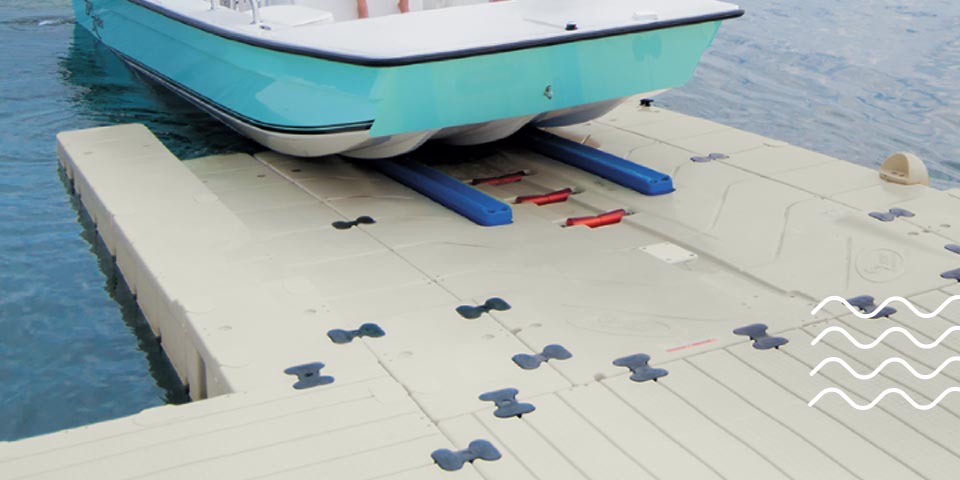
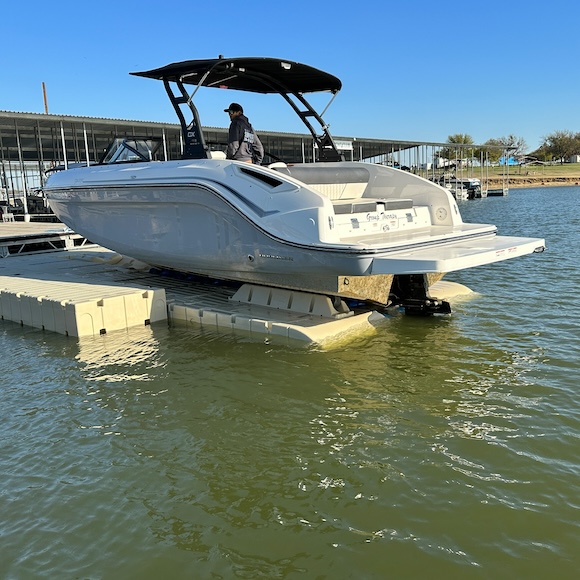
- Boat ports: Usually available in various sizes and weight capacities, boat ports can secure your vessel out of the water. These ports are particularly useful when you need to clean or detail your boat.
- Swim platforms: Floating docks with built-in swim platforms give swimmers quick access to the water. Pair them with a ladder, a dock slide and storage containers for spare towels, and you’ve got a fun-filled docking solution.
- Safety features: Floating docks with enhanced safety features, such as railings and boat bumpers, give you peace of mind.
- Accessories: From winches and solar pumps to benches and fish cleaning stations, there are many accessories you can add to your floating dock to ensure it’s a comfortable and practical space.
A Practical Solution to Fluctuating Water Levels
Floating docks for fluctuating water levels reduce the risk of damage from changing conditions. Floating docks also provide a quick and easy setup, the flexibility to move or reconfigure the dock and customizable layouts for greater versatility.
With opportunities to customize the features and configuration, you can tailor your floating dock to your specific needs by considering factors such as your dock’s environment, intended use and quality.