Filters
Types of Docks for Residential Use
For many people, a waterfront home represents the culmination of a long-imagined lifestyle goal, and a dock is an integral part of enhancing that dream. It’s the place where you enjoy a morning cup of coffee while watching the world wake up around you or luxuriating in endless summer sunsets with breathtaking views.
Different residential dock styles vary in materials, construction, installation needs and their response to fluctuating water levels. A fixed dock can be a good fit for deep, calm water, while a removable sectional dock often works better in shallower areas where flexibility matters. However, a modular floating dock offers maximum long-term flexibility by remaining usable year-round and adapting as your needs evolve.
Common Types of Residential Docks
Most homeowners end up comparing three different types of docks for residential use — fixed docks, pipe or sectional docks and floating modular docks. Because each works best under different conditions, your choice depends on your shoreline, water depth, climate and ownership goals.
Fixed Docks
Fixed docks stay in place year-round and create a permanent structure along your waterfront. Piling docks use wood or steel pilings driven deep into the lakebed, while crib docks use rock-filled frames anchored to the bottom.
This type of dock can work well in stable water conditions where the lakebed can support permanent construction. Because installers set the platform height, it doesn’t adjust as seasonal water levels rise and fall.
Installing a fixed dock calls for more up-front planning. They usually require professional equipment, some site preparation and lakebed work before placing the walking surface.
Pipe and Sectional Docks
Pipe and sectional docks use adjustable leg supports to hold the walking surface above the water. While they’re sturdy, they’re not permanent. Many systems are seasonal, making them a practical choice in areas where it’s too cold to enjoy your waterfront in winter.
Pipe and sectional systems can offer a practical middle ground if you prefer a removable dock. The trade-off is that they work best under specific water conditions and may require more hands-on effort each year.
Floating Modular Docks
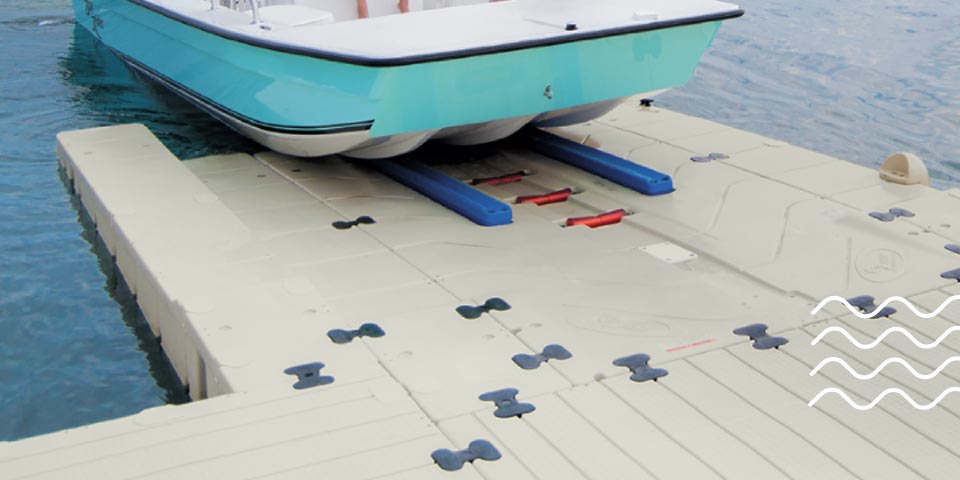
Floating modular docks use buoyant sections that sit on top of the water, maintaining a consistent height regardless of how high or low the water level is. A modular platform also gives homeowners more flexibility because you can assemble your dock sections to create various configurations:
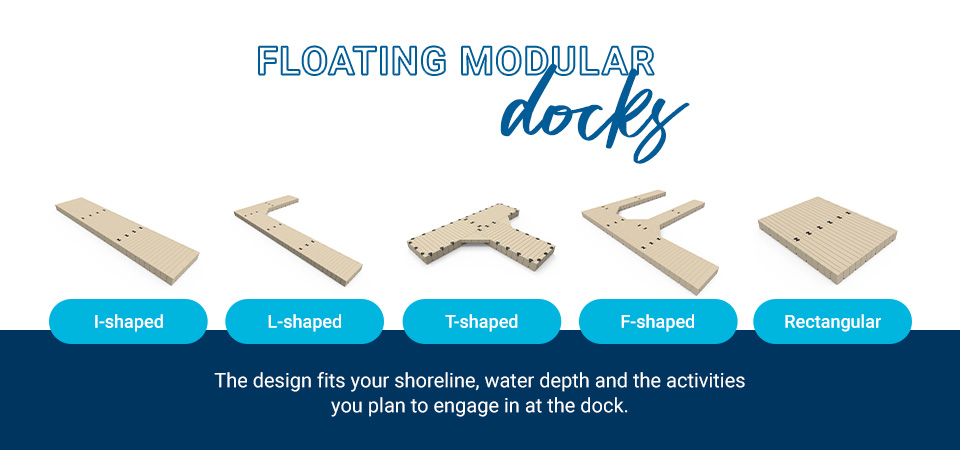
- I-shaped
- L-shaped
- T-shaped
- F-shaped
- Rectangular
- Custom
The design fits your shoreline, water depth and the activities you plan to engage in at the dock. They’re also a good choice for most budgets because you can start small and add accessories as your financial situation allows.
How to Evaluate Residential Dock Types
The best dock for your home is the one that suits how you use the water now and has enough flexibility to adapt to your changing needs. Compare each option across ownership factors that affect daily use, long-term cost and maintenance.
- Durability: Material choice affects how well a dock handles years of sun, water and seasonal exposure. Wood can rot, warp and splinter, while metal may need corrosion checks. Polyethylene resists many of the issues that drive traditional dock wear and tear.
- Maintenance requirements: Wood docks often need sealing, staining and board inspection. Aluminum systems may need hardware checks. Polyethylene dock surfaces clean easily with soap and water, requiring no painting, sealing or staining.
- Walking surface: Your dock surface should feel comfortable for family members and guests to use barefoot. Texture, drainage and surface temperature all affect how people move across the dock during a day on the water.
- Cost: Up-front price is only part of the picture. Replacement parts, seasonal labor and repairs can change the total cost over 10 to 20 years, and it depends largely on what material your dock consists of.
- Aesthetics: Wood is a classic, natural material, while aluminum has a clean profile and polyethylene offers a uniform, low-profile appearance close to the water.
- Ease of installation: While fixed docks typically require professional equipment to assemble, modular floating docks are easy to put together without heavy machinery, making installation faster and more straightforward.
- Water-level adaptability: Floating systems are always at water level, as they sit on the surface. Fixed docks remain at a single level, which can make access difficult during droughts or heavy rain.
- Environmental impact: Untreated polyethylene helps avoid chemical runoff that’s common in treated wood.
Why Modular Floating Docks Are the Modern Solution
Modular floating systems address the factors that can sway homeowners’ choices when comparison shopping. The system is ideal for people who want reliable water access without making dock upkeep a year-after-year project.
Low Maintenance Ownership
Traditional wood docks need regular care. After prolonged exposure to water and weather, they may need restraining, sealing to prevent moisture damage and in some cases, even replacement of damaged boards.
Modular floating docks made of polyethylene need little to no maintenance year after year. Cleaning is easy, too. A light rinse with soap and water keeps it looking good. Less time fixing issues frees you to enjoy being with your friends and family on and around the water.
The Right Fit for Any Shoreline
Every waterfront is different. Narrow frontage, shallow water, corner lots and irregular shorelines all affect which dock layout will work best.
Modular dock sections come in multiple sizes and shapes, so homeowners can create a dock that fits their space perfectly. In the future, you can expand by adding sections as needed.
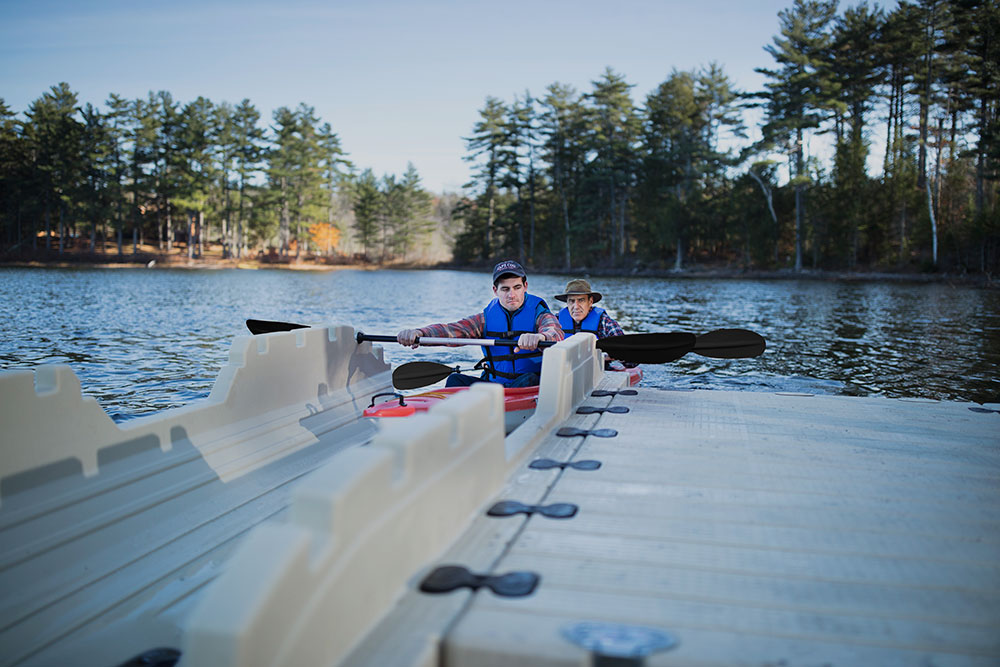
You can also choose from a wide range of accessories to turn your dock into the perfect system for any watersport your family enjoys:
A Comfortable Experience for the Whole Family
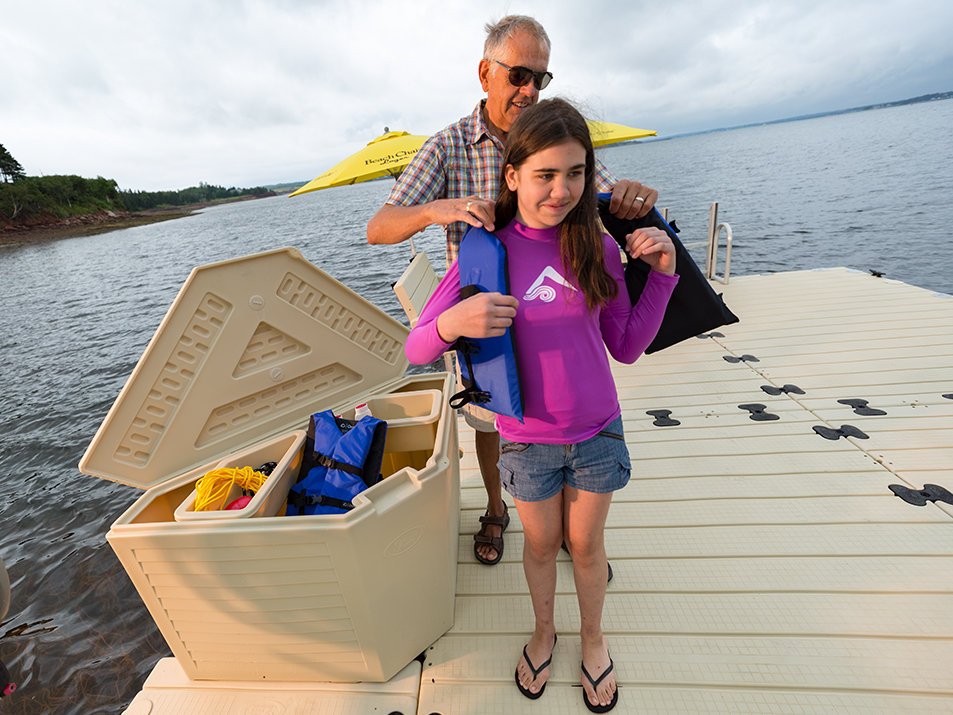
Residential docks often serve multiple purposes. Yours may be a launch point for early-morning fishing excursions, a swim platform in the afternoon and a gathering space when family visits. Built-in grooves drain water from the walking area, making it barefoot-friendly.
Adding a couple of practical accessories, such as benches and storage boxes, can elevate your dock from a purely functional space to a comfortable area where people want to spend time.
Straightforward Installation and Lasting Value
Many modular floating dock systems can be installed without professional help, heavy equipment or even fancy tools. Most people can set up their dock with the help of another person. Otherwise, local distributors can help with installation.
Long-term value matters too. EZ Dock floating docks, kayak launches, PWC ports and boat ports carry a 10-year limited warranty, protecting your investment.
Get Started With EZ Dock
Finding a dock for residential use is easier when you consider your real-life needs. Use EZ Dock modular floating dock systems to create a flexible setup for boating, swimming, fishing, kayaking and making priceless memories with your family.
Browse our different dock configurations and contact a local distributor for a quote built around your shoreline, watersports and budget.