Filters
How to Launch a Canoe
Canoeing is one of the most rewarding ways to enjoy the water. Whether exploring a calm lake or preparing your family for an afternoon paddle, the way you start sets the tone for your entire trip. Canoes are remarkably stable once seated and paddling, but the entry and launch can feel awkward. Poor form often leads to wobbles, wet shoes or in worst cases, an early swim. By following a clear process, you can keep your gear dry and set the pace for a relaxed trip.
In this guide to canoeing, you’ll learn step-by-step methods for launching a canoe from a dock or shoreline, how to exit safely, and launch systems that can make the process even easier.
How Do You Launch a Canoe From a Dock?
Docks are often the most convenient places to board. Their stability and height above the waterline allow you to step directly into the canoe instead of wading through shallow water. However, technique matters. Even the most stable canoe will shift if you enter too quickly or without proper positioning. The following methods will help you master a dock launch, whether paddling alone or with a partner.
Solo Canoe Launch From a Dock
Launching alone requires patience, caution and confidence, but it becomes second nature with practice. By keeping your weight low and movements deliberate, you’ll avoid unnecessary wobbling. Here’s a straightforward approach:
- Line up your canoe: Position the canoe parallel to the dock, close enough to reach the far gunwale — the canoe’s upper edge — without too much stretching. This position gives you the best leverage point for stepping in.
- Stabilize the canoe: Hold the dock’s edge with one hand and stretch your other hand across to the far gunwale to create a steady triangle of support.
- Step into the center: Bring one foot into the middle of the canoe, right on the centerline. Crouch or kneel to keep your weight low, then move the second foot similarly.
- Settle into position: Once both feet are in, ease onto the seat or kneeling pad. Avoid sudden movements to prevent the canoe from rocking. Staying low also reduces the chance of tipping.
- Push away from the dock: Push your paddle or hand against the dock to glide the canoe into open water. A gentle push is enough to clear the dock and prepare for your first stroke.
How to Launch From a Dock With a Partner
Launching with a partner is usually quicker and easier because one person can steady the canoe while the other boards. Try this simple sequence:
- Place the canoe parallel to the dock: As with a solo start, the canoe should run alongside the dock so both paddlers can easily step in.
- Hold steady and board in sequence: One paddler should brace the canoe by gripping the dock with one hand and the gunwale with the other to minimize rocking as the other boards. The bow or front paddler climbs in first, stepping carefully into the center and sliding into the front seat. Once settled, the stern or rear paddler follows.
- Coordinate the push-off: With both paddlers seated, use the dock edge or paddles to push the canoe into open water. Keep your motion in sync as you ease away from the dock.
How to Launch a Canoe From a Lake, River or Ocean Shore
Launching from the shoreline requires more preparation because water conditions can vary. Calm lakes and rivers are beginner-friendly, but waves, currents and uneven ground can add complexity. Shore launches demand a slightly different approach depending on whether you’re paddling solo or with a partner.
Solo Launch From Shore
Heading out alone requires careful setup to keep your canoe steady as you climb in. The goal is to get the boat floating enough to balance, while still close enough to shore for support. Here’s a reliable process:
- Set the canoe in position: Choose a gentle, sloping shoreline and place the canoe perpendicular to the water’s edge. The bow should float in the water while the stern remains securely on land. Make sure the canoe is fully supported along its length — avoid situations where the middle is unsupported by land or water, as this can make the canoe unstable and prone to tipping.
- Step into the center: Stand beside the canoe and grab both gunwales for support. Step one foot into the middle of the canoe, staying low. Bring the other foot in next and kneel in the center.
- Move into paddling position: Once the canoe feels steady, shift carefully to the seat or kneeling pad. Keep your hands on the gunwales as you adjust and maintain smooth movements to avoid rocking the hull.
- Push off smoothly: Use your paddle blade or your hands against the ground to glide the stern fully into the water. From there, start paddling to gain forward momentum.
Launching From a Shore With a Partner
A partner makes shoreline launches faster and more stable. With shared roles, you reduce the chance of tipping and get into paddling rhythm faster. Here’s a sequence that keeps the canoe balanced:
- Assign paddling roles: The more experienced or stronger paddler should take the stern, since this position controls the boat’s direction.
- Position the canoe correctly: Place the canoe perpendicular to the shoreline, with the bow in the water and the stern on land.
- Stabilize the canoe for boarding: The stern paddler should grip the stern and gunwales, anchoring the canoe so that the bow paddler can enter. The bow paddler enters first, staying low and holding the gunwales while moving into position. Once seated, the stern paddler pushes the canoe fully afloat and steps in carefully.
- Paddle in unison: Once both paddlers are seated, coordinate your strokes to move smoothly into deeper water.
Exiting the Canoe Safely
Getting out of the canoe is just as important as launching a canoe. A poor exit can undo all the work you put into a smooth trip. By slowing down and using the same low, centered posture as when entering, you’ll keep the process steady whether at a dock or shoreline.
Exiting at a Dock
Leaving the canoe at a dock is all about timing and balance.
- Approach the dock in parallel: Paddle slowly so your canoe comes alongside the dock, parallel to its edge. This positioning provides maximum stability and makes holding on to the dock easier.
- Stabilize the canoe: Hold the dock firmly with one hand and the gunwale with the other to stabilize the canoe and prevent it from drifting. If you have a partner, one person can stabilize the canoe while the other exits.
- Shift your weight to the center: Move your weight toward the canoe’s center and stay low to maintain balance as you step out.
- Step out carefully: Place one foot onto the dock while keeping your other foot in the center of the canoe, then bring your second foot out as you stand slowly.
- Assist your partner: If paddling with a partner, help steady the canoe for them as they exit.
Exiting at a Shoreline
Shore exits are simple but can get slippery if the bottom is muddy or rocky. Here’s the safest way to wrap up your trip:
- Land perpendicular to shore: Paddle directly toward the shore so the bow of your canoe gently touches land to make it easier to step out into shallow water.
- Stabilize the canoe and step out in order: The bow paddler steps out first, holding the boat steady for the stern paddler to step out. Keep your knees bent and your weight centered as you step out into ankle- or knee-deep water to maintain balance.
- Pull the canoe fully ashore: Once everyone is out, drag the canoe far enough onto land that it won’t drift away, then unload your gear.
Canoe Launch Basics: What You Need to Know Before You Start
Before heading to the water, prepare the right gear and scope out the launch site. Proper preparation makes launching a canoe safer and sets you up for a more enjoyable day. Here’s what to check off before you step aboard.
Essential Gear Checklist
A few essentials go a long way in making every trip smoother. Here’s what to bring:
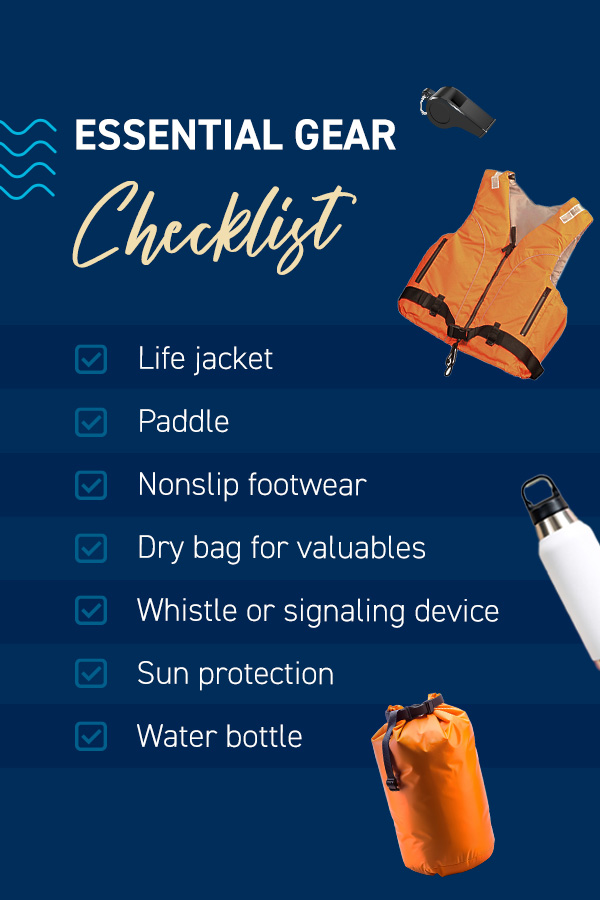
- Life jacket: A personal flotation device is the most critical safety equipment. Choose one that fits snugly without restricting arm movement.
- Paddle: A lightweight, well-sized paddle makes all the difference. If you’re unsure about size, opt for an adjustable model. Bring at least one main paddle and a backup if you’re heading on a longer trip.
- Nonslip footwear: Shoes with traction help prevent slips when boarding or stepping into shallow water. You should wear closed-toe, secure-fitting shoes to protect yourself from hazards like sharp rocks and debris.
- Dry bag for valuables: Keep phones, keys, snacks, maps and first-aid supplies safe from splashes with a sealed dry bag secured to the canoe.
- Whistle or signaling device: A small, easy-to-reach safety whistle can help attract attention if needed.
- Sun protection: A wide-brimmed hat, sunglasses and water-resistant sunscreen shield you from glare and harmful rays during outings.
- Water bottle: It’s easy to overlook carrying drinking water when canoeing. Bring a full bottle, especially in warmer weather.
Choosing the Right Launch Spot
Where you launch matters just as much as how. Here are a few things to keep in mind when choosing your launch location:
- Look for calm water: Avoid exposed areas with heavy waves or current. A sheltered cove, slow-moving river or quiet lakeside is ideal for a smooth canoe launch.
- Aim for a gradual slope if launching from shore: A gentle shoreline is best for stepping into the canoe. Steep banks make entry awkward and unstable. A gradual incline also lets you ease the canoe without scraping or tipping.
- Inspect dock conditions: If you’re launching from a dock, ensure it’s stable and free from loose boards. Remove any algae or slick debris that could cause slipping.
- Choose ADA-accessible launches if needed: ADA-accessible launch systems with transfer benches and grab rails provide better support for paddlers with mobility needs.
- Always check the weather and water conditions: Always review forecasts, wind speeds and currents before starting. Conditions can change quickly on lakes, rivers or coastal waters.
Common Mistakes to Avoid When Launching a Canoe
Even seasoned paddlers can make errors that can lead to unnecessary splashes or wobbly starts. By being aware of the most common slip-ups, you can avoid them from the start:
- Uneven weight distribution: Packing too much gear or loading it unevenly throws off the canoe’s balance. Keep heavier items centered and low.
- Standing or moving too quickly: Sudden shifts in weight are one of the top reasons canoes tip during boarding or exiting. Stay low and move in smooth, deliberate steps.
- Leaving out essential safety gear: Forgetting a life jacket or dry bag might not seem like a big deal — until you need them.
- Ignoring your surroundings: Launching without checking for nearby boats, obstacles, swimmers or shallow rocks can cause accidents immediately. Mud, algae or loose rocks at the launch point can also make footing treacherous.
- Heading out in poor conditions: High winds, fast currents or storms are no time to experiment with a new canoe launch.
How EZ Dock Launch Systems Make Canoeing Easier
Traditional shore or dock launches require balance, patience and sometimes a helping hand. With a specialized system, the process becomes faster and more controlled. EZ Dock offers dedicated canoe launch platforms that eliminate the awkwardness of boarding and reduce the stress of fluctuating water levels. Whether you’re launching from a residential lakefront or managing a commercial site, these features stand out:
- Reliable launches in changing conditions: EZ Dock floating launch systems stay level even with fluctuating water levels or boat wakes, giving you consistent boarding height. Launch rollers and guide rails make it simple to steady your canoe and slide smoothly into the water.
- User-friendly design for all abilities: ADA-accessible transfer benches and grab rails make it easier for everyone to board without much assistance.
- Slip-resistant surfaces: Whether barefoot or wearing shoes, the platform provides secure footing without splinters or exposed fasteners.
- Minimal maintenance requirements: EZ Dock canoe launch systems are easy to clean and maintain and resist wear from sun and water. No staining, sealing or painting is needed. Cleaning is as simple as a quick rinse.
- Custom-fit to your property: Whether for a private dock or a multi-unit commercial setup, EZ Dock systems adapt easily to different shoreline configurations.
Contact EZ Dock Today to Upgrade Your Canoe Launching Experience
Mastering the basics of launching a canoe is the first step toward a relaxing, enjoyable day on the water. From solo techniques to partner launches, the key is staying low, balanced and prepared with the right gear.
For those who want added stability and convenience, EZ Dock offers launch systems that make boarding your canoe easier. With slip-resistant surfaces, ADA-accessible options and customizable layouts, these docks make canoeing approachable for beginners and seasoned paddlers.
Transform your shoreline into a place where family and friends can launch with confidence. Contact EZ Dock today to request a quote, find a distributor near you or learn more about canoe launch systems.