Filters
The Future of Public Waterfront Design: Trends in Parks and Recreation
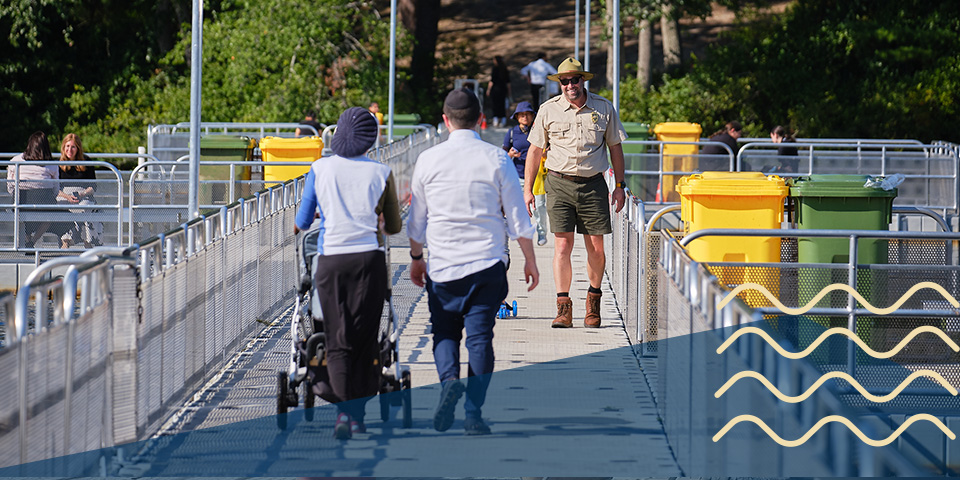
A new era of recreational trends is emerging. How leaders plan and design parks and recreational amenities to embrace accessible, sustainable and technological trends and advancements will directly impact waterfront property resilience. This post explores these emerging trends and shows how waterfront development teams incorporate them to promote longevity.
Sustainability and Resilience in Public Waterfront Development
Great waterfront properties embrace environmentally responsible principles. These spaces are excellent areas for people to gather, but they also support wildlife, aquatic and insect life. Sustainable development is a crucial part of planning that balances environmental considerations with economic growth.
Waterfront properties are crucial for transportation, economic development and recreation, but they’re also vulnerable to pollution and climate change. Sustainable and resilient waterfront development embraces climate adaptation strategies, ecological restoration, and sustainable materials and processes.
Climate Adaptation Strategies
A changing climate requires leaders to rethink waterfront development. Factors like heavier storms, increased flooding risks, hotter temperatures and longer drought periods can significantly impact waterfront success.
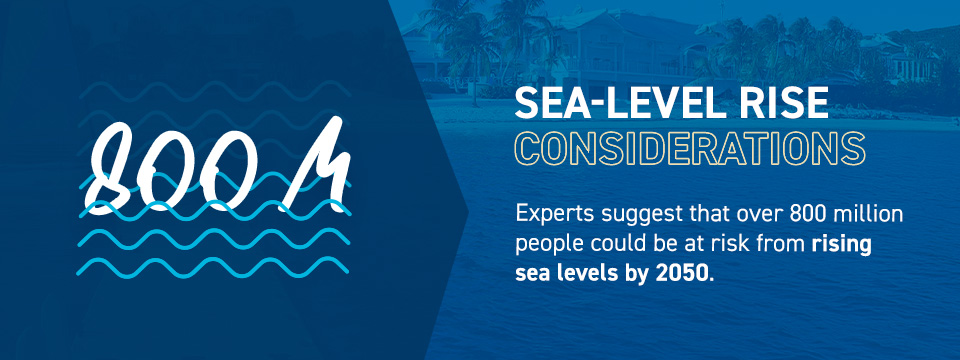
- Sea-level rise considerations: Experts suggest that over 800 million people could be at risk from rising sea levels by 2050. Rethinking traditional infrastructure approaches is critical for developing adaptable urban environments. Some organizations are embracing nature-based solutions by replacing hard seawalls with mangroves and oyster reefs to absorb floodwaters. Other trends implement flexible infrastructure, which can move as conditions change. Unique flood designs and raised buildings also appear on waterfront properties to promote lasting safety.
- Storm surge protection measures: To combat storm surges, resilient waterfront properties have seawalls, dune restorations and flood-control barriers. Seawalls and revetments protect the coastline from storm surges and effectively prevent erosion. Dune restoration initiatives enhance natural dunes to protect against storm surges, and flood-control barriers block water flow to prevent flooding.
- Erosion control techniques: Native beach rocks and shoreline vegetation naturally protect against erosive forces. Waterfront developers can protect existing vegetation or reestablish native plants to stabilize shorelines. Replanting a mixture of flowers, shrubs, grass and trees is an excellent way to control and prevent waterfront erosion.
Ecological Restoration and Enhancement
Many leaders are revitalizing urban waterfronts with ecological restoration and enhancement. As more people recognize the importance of balancing environmental and economic considerations, strategies are emerging to bridge the gap:
- Habitat restoration projects: Human activity has threatened habitats of all kinds, bringing unprecedented challenges to our ecosystem. Waterfront property managers may reverse this damage with habitat restoration projects. Many leaders have already made great strides, such as in Buffalo, New York, with a habitat for Great Lakes fish, and Seattle’s Pioneer Square Habitat Beach, improving ecosystem productivity with a robust marine habitat.
- Green infrastructure solutions: Many parks and recreation design trends embrace green infrastructure. Developers use innovative ways to ensure waterfront longevity and environmental friendliness, from natural drainage systems to restored wetlands and permeable pavement.
- Water quality initiatives: Coastal water quality has become a critical issue. Decreasing marine oxygen levels resulting from climate change, pollution and organic matter have slowed development, increased mortality and decreased reproductive abilities among marine animals. Recent waterfront development trends aim to improve water quality with pollution prevention measures, natural buffer restorations and green stormwater infrastructure. Many leaders also invest in smart monitoring solutions to quickly identify potential water problems and adopt proactive management practices.
Sustainable Materials and Construction Processes
Like many industries, waterfront development is shifting toward more sustainable construction materials and processes. Leaders are embracing developmental sustainability by:
- Using recycled and locally sourced materials: Recycled glass, steel, plastics and concrete can construct playgrounds, benches and pathways. Waterfront developers can reduce transmission emissions by using recycled and locally sourced materials, waterfront developers can reduce transmission emissions.
- Minimizing environmental impact during construction: With a renewed focus on environmental friendliness, waterfront developers are embracing several strategies to minimize the environmental impact of construction processes. For instance, assembling components off-site reduces pollution, noise and waste at the waterfront. Additionally, deconstructing and reusing old structures extends material lifespans while reducing waste.
- Implementing energy-efficient technologies and designs: From solar power integration to low-impact transportation, there are many ways to implement energy-efficient technologies and designs. Passive design strategies include placing trees and vegetation to cool public spaces naturally and maximize breezes with natural ventilation to reduce mechanical cooling needs.
Technology Integration in Public Waterfront Design
Technology could be a disruptive innovation for trends in parks and recreation design. The unique capabilities of artificial intelligence (AI) and mobile devices offer opportunities for improved sustainability, boosted efficiency and enhanced visitor experiences.
Smart Park Technologies
Smart systems empower developers to embrace unique designs that enhance public safety while promoting efficiency and sustainability. Some of these notable technologies include:
- Smart lighting and irrigation systems: Smart lighting controls like timers, motion sensors and daylight sensors reduce light pollution while optimizing energy usage and ensuring visitor safety. Automated irrigation systems can leverage sensors to optimize water use for landscaping.
- Real-time environmental monitoring: Real-time monitoring is a game changer for waterfront parks. Monitoring systems can aid water quality initiatives by informing management teams of pollutants, temperature changes and additional information. Immediate data about storm surges, tides and rainfall can also guide park management and emergency response actions.
- Interactive visitor experiences: Technologies can also enhance visitor experiences. Interactive kiosks, digital signage, Wi-Fi connectivity and mobile app usage can allow visitors to share up-to-date information, learn more about the waterfront and choose enjoyable activities.
Augmented Reality (AR) and Virtual Reality (VR) Experiences
Gamification is making its way to parks and recreational spaces. AR and VR are powerful tools for enhancing the experience, accessibility and education of waterfront parks. Check out some creative ways to use these technologies:
- VR simulations of historical ecological events: AR and VR can aid historical and cultural storytelling. Overlaying historical structures, events and images allows visitors to look into the past and see how the waterfront has changed.
- Interactive educational games: Visitors can blend learning and fun with interactive games. For example, QR codes and links on signage can allow visitors to point their phone at water features, plants or other park elements to learn pop-up facts, identify species or answer historical questions.
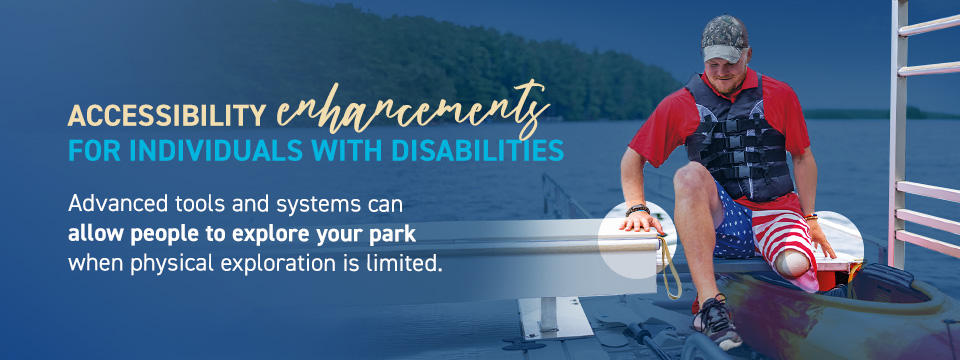
- Accessibility enhancements for individuals with disabilities: From virtual ecological tours to AR maps, you can make your park more accessible with these advanced technologies. Advanced tools and systems can allow people to explore your park when physical exploration is limited.
Data-Driven Design and Management
Waterfront parks use smart infrastructure, advanced analytics, real-time data and other technology tools and systems to create more responsive, efficient and resilient spaces. These technologies allow developers to balance environmental conditions with community needs to create spaces where people and wildlife can thrive. Leaders are transforming the planning, building and operation of waterfront parks by:
- Using data analytics to optimize park usage: Predictive analytics empowers teams to implement adaptive management strategies. This data can aid in predicting when infrastructure needs upgrades or repairs to enhance efficiency and safety. This strategy allows teams to optimize resource usage, ensure park safety and maintain efficiency. Predictive analytics can also enable management teams to simulate future scenarios to inform emergency planning and resilient design.
- Tracking visitor behavior and preferences: Technologies like Bluetooth tracking can provide insight into visitor behaviors and preferences. Developers can use this information to understand popular routes, facility use and crowding. Implementing additional resources, like mobile apps, can make it easier to collect visitor feedback, user statistics and preferences to guide design updates.
- Enhancing safety and security: Data-driven designs that leverage up-to-date information, analytics and sensors can enhance park safety and security. Weather sensors can alert teams of hazardous weather conditions, guide emergency responses and enable timely closures when necessary. Data-driven designs can also aid in crowd and flow management, allowing teams to guide visitors from unsafe or crowded areas and provide emergency instructions.
Community Engagement for Parks and Recreation Design
Another significant focus of recent design trends is encouraging community engagement. Involving your community allows you to better align park initiatives with community needs. Engaging residents can improve design outcomes by enabling you to interact with more ideas that highlight local knowledge, prompt innovation and support inclusion. A project with strong community backing may also be more likely to secure long-term support and funding to contribute to waterfront property success.
Inclusive Design Principles
Regardless of age, ability, circumstance or background, everyone deserves a safe space. An inclusive design is welcoming, accessible and enjoyable for everyone. Inclusive designs remove barriers, create spaces where everyone feels welcome and celebrate diversity. Inclusive design principles include:
- Universal design considerations: Universal accessibility is critical for inclusive waterfront parks. Consider elements like barrier-free paths and accessible entrances and facilities. Paths should be smooth, wide and gently sloped to make it easy for those with wheelchairs, strollers or mobility challenges. Accessible features like ramps, docks and viewing platforms ensure everyone can enjoy the waterfront.
- Creating welcoming spaces for diverse communities: Incorporating local history, art and languages to reflect your community’s diversity can help create a welcoming space for everyone. Promote diversity with park areas that host different cultural events, activities and gatherings.
- Promoting social interaction and community building: Community areas like amphitheaters, picnic spots and plazas encourage people of all walks of life to gather and enjoy the waterfront. You can also further promote interaction and community building by implementing inclusive programming.
Participatory Planning Processes
The Centers for Disease Control and Prevention recommend getting community input to create or improve recreational areas. Doing so can promote access for everyone, connect residents and support park longevity. Your community is a valuable asset, so use it to your advantage by:
- Conducting community workshops: A community workshop can build trust and transparency while educating your community. It can also be an opportunity to gather local knowledge and encourage creative solutions to waterfront challenges.
- Posting online surveys and feedback platforms: Ask for community input directly with online platforms and surveys. This will allow residents to voice concerns, participate in decision-making, share information, and interact with the waterfront at all planning and design stages.
- Incorporating community input into design decisions: Regardless of the specific strategies you take to include your community in the design process, putting your words into action is essential. Incorporate community input into your designs to show that you value inclusivity, accessibility and continuous improvement.
Health and Wellness Waterfront Design Elements and Considerations
Parks and recreation leaders aim to improve overall health and wellness. Waterfront park leaders are embracing holistic wellness by supporting social connection, environmental accessibility, physical activity and mental health for everyone. Public parks and recreation spaces are critical in supporting good health, and waterfront park leaders can follow some popular trends to support this initiative.
Active Waterfront Design Principles
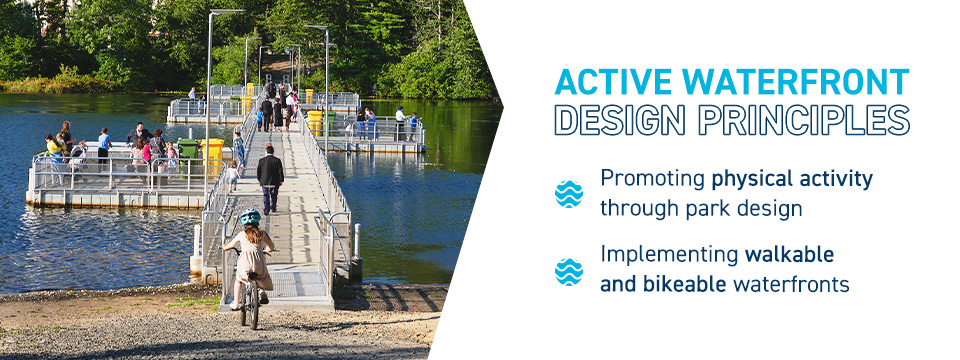
Active waterfront design invites everyone to move, play and connect on land and in water. Many waterfront designs are encouraging healthy lifestyles and activity by:
- Promoting physical activity through park design: Park designs incorporate multi-use pathways, outdoor fitness zones and active play areas. Wide, accessible paths encourage visitors to walk, jog, bike and skate around long, connected routes. Outdoor fitness zones and sports facilities empower visitors to replace or supplement indoor activity with outdoor movement. Inclusive play areas encourage children of all abilities to enjoy land and water features.
- Implementing walkable and bikeable waterfronts: Dedicated trails, safe crossings and access points allow walkers and cyclists to enjoy the full length of the waterfront. Amenities like repair stations, rest areas and bike parking also appear in designs to support activity initiatives.
Biophilic Waterfront Design Trends
Biophilic designs aim to restore nature and immerse visitors in natural experiences. These designs make land and water spaces interactive and accessible to support healthier lifestyles and park resilience. Some top biophilic design trends are:
- Incorporating natural elements into the built environment: Many environmental design initiatives double as biophilic trends. For example, reintroducing native species and incorporating living shorelines creates beautiful and beneficial spaces for people and ecosystems.
- Creating visual connections to nature: Creating visual nature connections is a key principle of biophilic design. Many waterfront leaders maximize water views by using low or transparent barriers and incorporating elevated lookouts. Other developers integrate natural landscapes with layered vegetation and nature-integrated pathways. Building transparency and architectural framing with pergolas and openings further allows designers to frame specific views.
- Enhancing sensory experiences: Sensory experiences can make public spaces more memorable and immersive, and there are many ways to incorporate natural sensory elements into waterfront parks. Water features, like fountains and waterfalls, and wildlife habitats for birds and frogs enhance sound experiences. Dramatic views of land, water and sky create stunning visual experiences. Textured materials and interactive features invite hands-on exploration, and fragrant native plants allow people to enjoy natural aromas. Edible landscapes, like community gardens or fruit trees, can encourage people to taste the great outdoors.
Why Trust EZ Dock With Your Waterfront Property?
EZ Dock is your partner in revolutionizing waterfront access. For over 30 years, our team has combined stability, strength and lightweight construction to develop diverse products that provide exceptional customer experiences. Our products feature premium materials to ensure durability and longevity. We also work closely with each client to produce custom configurations that meet functionality and efficiency needs. With unmatched durability and weather resistance, waterfront park teams can trust us to deliver innovative products you and your community will love.
Shaping the Future of Waterfront Parks
The future of waterfront parks is bright. Recent design trends embrace sustainability, technological advancements, inclusivity, and health and wellness initiatives to support longevity while meeting environmental and community needs.
With EZ Dock, you can embrace these trends by incorporating eco-friendly products that stand the test of time. Embrace innovation with EZ Dock. Request a quote to create vibrant, sustainable and inclusive waterfront parks for future generations.