Filters
The History of Docks: The Evolution of Dock Design and Construction
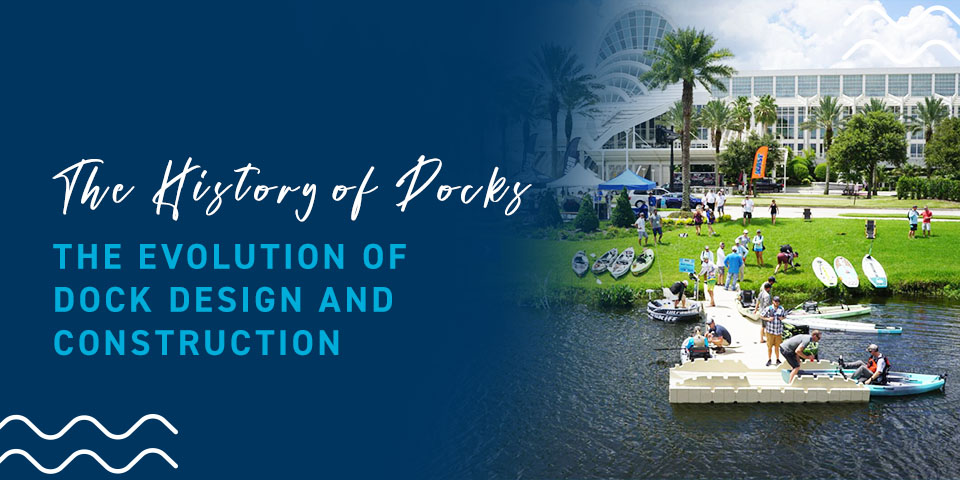
The history of docks stretches back thousands of years. While they started as ancient stone basins, they’ve evolved into the modular floating systems we see today. Historically, people put down roots and cities near water. For centuries, we have built docks to make life on the water easier. Trade, ship repair and recreation are all made easier with a dock.
Today’s boat owners want more than standard utility. They need dock systems that are durable, maintenance-free and adaptable. Let’s see how far we’ve come and where the future of docks might be going.
What Actually Is a “Dock?”
When we talk about boat docks’ history, a few images come to mind. In American English, a “dock” is any human-made structure where people tie, load or repair boats. In British English, that same word can mean the water basin next to a wharf or quarry. But the general idea of a dock is the same — something that provides access to the water for boats and people.
Over time, we developed specialized terms:
- Quay: A solid wall or platform built along the shoreline for ships to tie up.
- Wharf: Extends into the water and runs parallel to shore.
- Pier: Goes out farther so boats can sit in deeper water.
- Dry docks: Enclosed basins that workers can drain to repair ships below the waterline.
- Floating docks: Docks that use buoyancy to rise and fall with the water level.
The Evolution of Dock Design
Docks are thousands of years old. If people lived near water and used ships, they likely used some type of dock for convenience. From 2500 B.C.E. to the Industrial Age, docks have seen several major changes.
The Earliest Dockyards
One of the oldest known artificial docks is at Lothal, in present-day Gujarat, India. Dated between 2500 and 2300 B.C.E., it’s a large trapezoidal basin thought to have functioned as a dockyard. The Lothal dock basin included kiln-brick walls, a spillway and mudbrick wharf leading to a warehouse platform.
The oldest known harbor is Wadi al-Jarf in Egypt. Dating back to 2500 B.C.E., this site provided mooring and logistical support for Red Sea vessels. It has storage galleries carved from limestone and large stone anchors. Even 4,000 years ago, people were building complex dock systems for their boats.
After this, the next major step in dockyards came from Carthage and Athens in ancient Tunisia and Greece during the fourth to second centuries B.C.E. Carthage developed a circular military harbor with ship sheds and berthing for warships. The Athenian port at Piraeus had covered ship sheds, slipways and fortified harbor works.
The Medieval to Early Modern Period
For a few thousand years, docks remained relatively the same. Maritime trade expanded during the medieval period, from 500 C.E. to 1500 C.E., and people started building fixed shoreline structures. The Mediterranean, South Asia and Northern Europe all have records of quays, wharves and piers. These let ships tie up at shore and transfer cargo from permanent areas. Builders used stone, wood, and eventually brick for these docks.
The Industrial Revolution
With the start of the Industrial Revolution in 1760 came material innovations and modern mechanical power. Steam power and steel allowed ships to become larger and expand trade capabilities, which meant dock design had to evolve. Reinforced concrete and steel created bigger piers, quay walls and dry dock basins that could hold bigger loads and resist harsher conditions.
The Royal Albert Dock in Liverpool, England, was revolutionary during this period. It opened in 1845 as the first dock complex in Britain built from cast iron, brick and stone without any structural wood. It was noncombustible, a change from wood-based docks of the previous centuries. The Royal Albert Dock also featured hydraulic cranes, reducing unloading time and speeding up throughput. Ships could unload and load directly into the warehouse.
This period also saw advances in dry docks, including the building of Dry Dock 1 in Charlestown. As nations built naval and commercial ports, they needed a way to maintain and repair these large ships. Dry docks let them launch or haul heavy vessels and clean them below the waterline.
How Floating Docks Happened
As trade and boat ownership expanded, it became clear that fixed structures like piers had limits. Stationary docks require more maintenance, and they need dredging in shallow areas. Plus, changes in seasons or tides could make the dock inaccessible. Pilings and retaining walls took heavy damage each year in regions with ice or strong storms.
By the late 19th and early 20th centuries, builders began experimenting with floating platforms. Early versions used wood, barrels or metal drums for buoyancy. A floating dock rises and falls with the water, keeping it accessible through changing tides. These designs reduced dredging needs and kept dock users closer to the waterline.
Engineering advances continued the evolution of floating docks. Naval operations used large floating dry docks, which lifted vessels out of the water for repairs. Smaller floating docks appeared in marinas and by waterfront homes. Users could still have docks in places where shoreline depth or soil conditions make fixed docks impractical.
The Evolution of Dock Construction
Dock construction is heavily influenced by available materials. As we found new materials, dock construction became stronger and more functional. While wood was the primary material for centuries, modern inventions have created waterproof, long-lasting docks that can withstand years of wear. Here’s an overview of dock material construction:
- Timber: Wood is a primary material for dock building. Timber piles and planks were easy to source and shape. However, exposure to constant moisture, insects and freeze-thaw cycles meant wooden docks required frequent repairs. Wood docks also warp and rot over time.
- Stone and brick: More trafficked ports eventually used timber reinforced with stone or brick. Quays built from dressed stone or kiln-fired brick created stronger retaining walls and platforms. Stone and brick were more durable than wood but also more expensive.
- Iron, steel and concrete: The Industrial Revolution introduced cast iron, steel sheets and reinforced concrete walls. Docks could handle heavier ships and higher impact forces, but corrosion and cracking were still issues.
- Plastics and composites: Plastics entered the picture in the late 1900s. High-density polyethylene (HDPE) and other engineered plastics offered lightweight, strong docks. They resisted ultraviolet degradation and didn’t need painting, sealing or frequent maintenance like wood and concrete.
Inventions That Lasted
The history of dock building is full of trial and error. While many modern systems use plastic, some ideas have stood the test of time. At Lothal, Harappan engineers used tidal flow to keep their docks silt-free. Modern marina planning still uses principles inspired by these systems to prevent silt accumulation. The Royal Albert Dock pioneered noncombustible construction using iron and brick.
These innovations were the predecessors to longer-lasting materials. Even the first floating pontoons proved that docks could adapt to water instead of standing still. Modern modular docks take these innovations and deliver the most advanced product to users.
What Modern Floating, Modular Systems Look Like
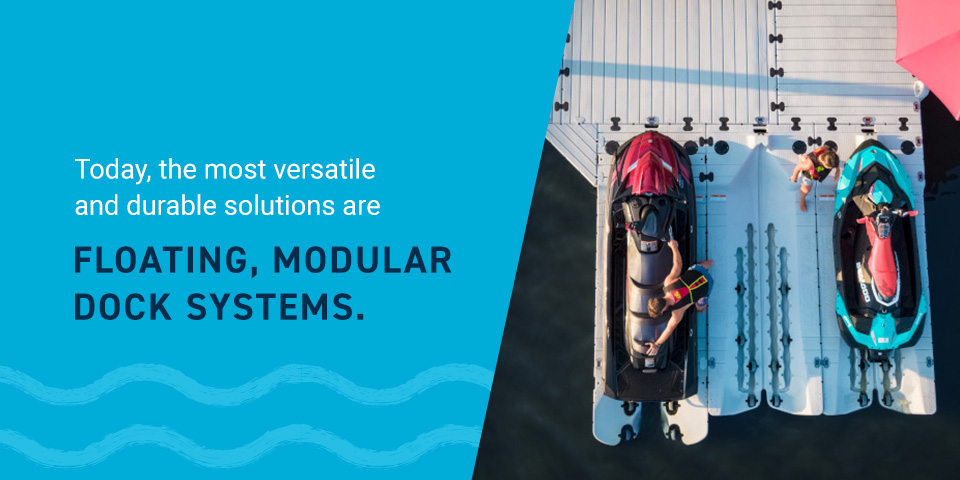
Modern dock design combines centuries of problem-solving. Fixed wooden structures were affordable and provided access, but they needed constant care. Heavy stone docks were strong but limited in flexibility. Today, the most versatile and durable solutions are floating, modular dock systems.
What Is a Modular Dock?
A modular dock is a system built from individual floating sections that lock together. They can be configured in straight lines or T-, L- or U-shapes based on the waterfront and use. Anchoring systems secure the dock to the shoreline or lakebed, while gangways provide easy access. Because the entire dock floats, it naturally adjusts with changing water levels.
Customization and Expansion
One of the modular docks’ biggest advantages is flexibility. Waterfront owners can start with a smaller layout and expand over time, adding new sections and accessories or swapping pieces around as their needs change. Modular systems can be rearranged for different boat sizes or recreational needs, while traditional dock materials cannot expand or change as easily.
Accessories
Floating modular docks also support a wide range of add-ons. Dock owners can add:
- Kayak launches
- Dedicated personal watercraft (PWC) ports
- Swim platforms
- Ladders
- Low-profile sections
- Railings
- Gangways
- Storage
These accessories make the dock useful for more than just boating. The entire family can spend the day on the dock and enjoy convenient watersport access without investing in multiple, nonfloating structures.
How EZ Dock Solved the Maintenance Problem
The leap from wood and concrete to modern plastic docks didn’t happen overnight. It took years of innovation and failure to create the durable, flexible materials we have today. That’s exactly how EZ Dock began.
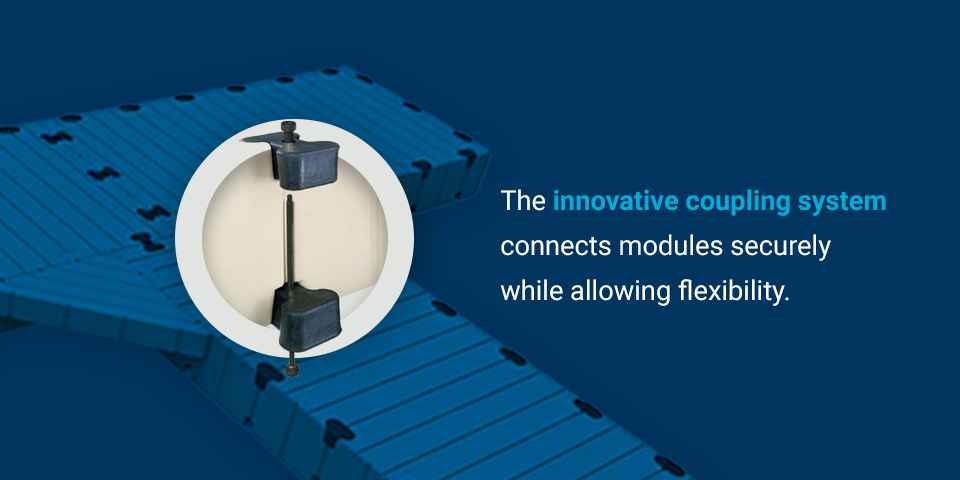
EZ Dock was created to eliminate traditional dock options’ heavy maintenance and repairs. The result was an eco-friendly, durable floating dock system that could handle waterfront conditions while giving people more time on the water. All EZ Dock roto-molded products are made in the USA using a process that produces sections that don’t chip, warp, peel or need paint. The innovative coupling system connects modules securely while allowing flexibility. The result is a dock system that absorbs movement from waves while handling the load demands of traditional docks.
Fitting the Dock to Your Water
No two shorelines are the same, so your dock design has to consider local conditions. Modular docks are some of the best options since you can adapt them to different environments without compromising on design or quality. Adapt your dock to the water and shoreline to protect your property from damage.
Lakes and Reservoirs
Calm lakes and reservoirs are perfect for family recreation. A modular floating dock makes creating layouts that fit different needs easy. Use a T-shape for fishing or a swim platform for kids. Because many water levels on lakes rise and fall with the seasons, a floating system keeps dock access consistent year-round.
Rivers and Moving Water
Rivers mean currents, seasonal flooding and shifting sediment. Traditional stationary docks can experience structural strain under these conditions. Floating docks will naturally adjust to the changes in flow and depth. Property owners can tailor anchoring systems to riverbeds, which ensures the dock stays secure and functional.
Coastal Areas
Coastal properties and marinas face some of the most extreme water and weather conditions. Daily tidal swings, saltwater corrosion and heavy storms will quickly wear down traditional docks. Floating docks are a practical answer because they move with the tide. Boats will stay at dock height all day. Plastic construction also resists the salt and sun exposure that can wear down metal and wood over time.
Frequently Asked Dock Questions
When looking to invest in the latest advancement in dock construction, it’s best to do your research. Here are some answers to commonly asked dock questions to help you find the right dock for your needs.
How Do Floating Docks Handle Changing Water Levels?
Floating docks rise and fall with the water level. Seasonal lake changes and tidal shifts all change the water level, but your floating dock will still sit on top of the water. Modular floating docks are easier to use, whether boarding boats or just hanging out.
Can You Reconfigure the Floating Dock Layout?
Yes. One of the biggest advantages of modular docks is their versatility. Buy the dock sections you want and expand as your needs grow. If you want a different layout, just rearrange the sections.
What’s Different About Plastic Docks Compared to Wood?
Plastic docks don’t rot, splinter or need annual staining. They deliver long-term performance without high maintenance needs. There’s no cycle of sanding, sealing and replacing boards like with wood.
Do You Need a Dock Permit?
Not all floating docks need permits — it depends on where you live. Permanent docks almost always need a permit to install, but floating docks are more location-specific. Check with your state and locality before installing your floating dock.
Invest in the Next Chapter in Dock Evolution
From ancient basins to modular floating systems, docks are a core part of waterside life. EZ Dock is the next step in centuries of dock innovation. With durable, maintenance-free docks made in the USA, we make it easy to customize your dock and have fun. Our modular plastic systems rise and fall with the water, won’t rot, and can be customized for any shoreline. After over 26 years as a pioneer in dock innovation, EZ Dock is the best investment you can make in your waterfront property. Talk with a local distributor today to start your dock design!