Filters
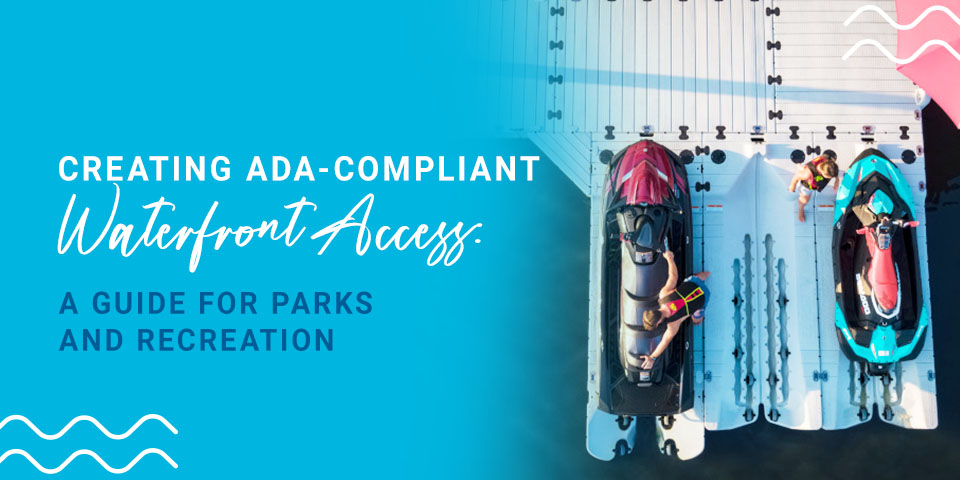
Creating ADA-Compliant Waterfront Access: A Guide for Parks and Recreation
Creating inclusive spaces is essential, especially in recreational places where every member of your community should be able to enjoy the great outdoors without limitations. Outdoor recreation is critical for mental well-being, physical health and community interaction. To ensure everyone has the opportunity to enjoy public outdoor spaces, you must adhere to the civil rights law that prohibits discrimination against anyone with a disability.
The Americans with Disabilities Act (ADA) defines a framework for implementing accessible designs and incorporating features to facilitate easier access for everyone, regardless of their physical capabilities. The ADA ensures everyone has the same access to park amenities and facilities, including waterfronts across the country.
This guide explains ADA boat dock requirements, parking and drop-off designs, and accessible waterfront features so you can create an inclusive and accessible space for your community.
Understanding ADA-Compliant Recreational Facilities
The ADA outlines accessibility standards for new construction and alterations to existing facilities to promote access to everyone. These standards apply to local and state government-operated facilities and businesses open to the public. Facility owners, government workers and community planners must understand these standards to ensure equal access for everyone and meet the community’s legal and ethical responsibilities.
Key ADA Requirements for Accessible Routes
Accessible routes are a critical component of ADA compliance. Waterfront properties can be complex environments, making it essential to understand and adhere to the minimum requirements for accessibility. Key ADA requirements include:
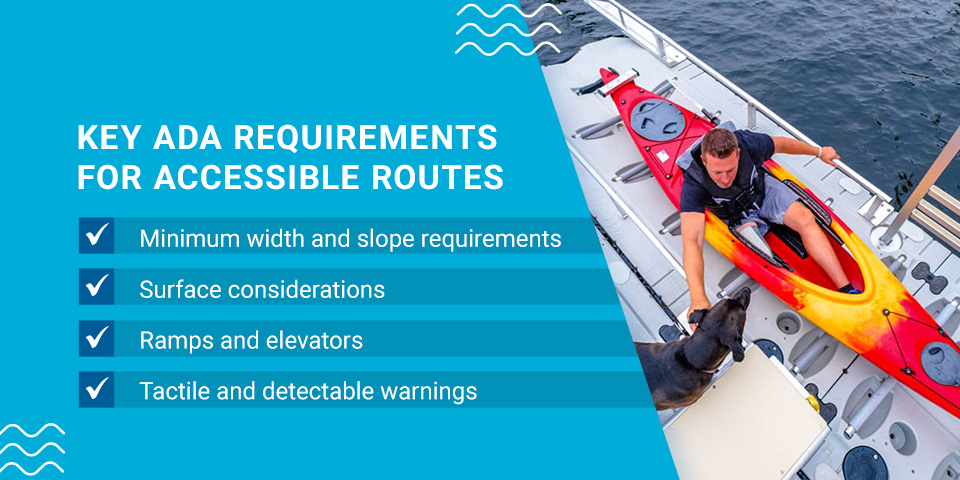
- Minimum width and slope requirements: Walking surfaces must be at least 36 inches wide. In areas with a 180-degree turn around a 48-inch-wide element, the route must be 42 inches wide approaching and leaving the turn and 48 inches wide at the turn. Accessible walking routes may have a maximum slope of 1:20.
- Surface considerations: Floor and ground surfaces must be slip-resistant, stable and firm. Any carpet or tile must be firmly attached with a maximum pile height of 0.5 inches.
- Ramps and elevators: Ramps are necessary for small elevation changes in indoor or outdoor settings. Elevators are better for large elevation changes. Both features must meet standards for safety and independence. Ramps must not exceed a steepness of 1:12 except in existing buildings or facilities with space limitations. The width between ramp handrails must be at least 36 inches. Elevators must be able to accommodate a wheelchair and have controls between 15 and 48 inches above the floor. Elevator doors must have a minimum clear opening of 36 inches.
- Tactile and detectable warnings: Detectable warnings are distinctive surface patterns that alert people with vision impairments to drop-offs and street crossings. Public transportation facilities must implement detectable warnings on curb ramps.
Accessible Parking and Drop-Off Areas
Community planners must consider the appropriate number, size and location of all accessible parking and drop-off areas. When designing these spaces, waterfront owners may also need to consider environmental factors unique to waterfront properties.
- Accessible parking spaces: Accessible parking spaces use features to make it easier for people with disabilities to access services, goods or programs. In parking garages or lots, accessible parking spaces must offer the shortest accessible route to an accessible entrance. Parking spaces must be 96 inches or wider and have an access aisle of at least 60 inches. The required number of accessible parking spaces depends on the total number of parking spaces available.
- Location and signage of accessible parking: If you offer multiple parking options to multiple facility entrances, you must disperse accessible parking among the entrances. All accessible spaces must use the International Symbol of Accessibility, and all van spaces must use “van accessible” signage. All signs must be at least 60 inches tall so they remain visible when vehicles are in the space.
- Accessible passenger loading zones: When providing passenger loading zones, you must offer at least one accessible zone in every 100 linear feet of continuous loading zone. You must have accessible passenger loading zones at mechanical access parking garages and parking facilities where valet service is provided.
- Curb ramps and accessible routes to the waterfront: You must implement curb ramps along accessible routes with level changes greater than 0.5 inches. Curb ramps must seamlessly connect to accessible routes and offer smooth transitions at the top and bottom of the ramp.
Accessible Restrooms and Amenities
Restrooms and amenities must be located on accessible routes and usable for people with disabilities. These spaces are crucial for making the waterfront park welcoming and usable for everyone.
- ADA-compliant restroom layouts and fixtures: Restrooms must offer at least one accessible stall. Single-user toilet rooms must have grab bars free of sharp or abrasive elements. Toilet paper dispensers must be within reach of the toilet and offer continuous paper flow. Turning space is required in these rooms.
- Accessible picnic tables and seating: You must provide at least one accessible table on an accessible route. If wheelchair locations are at fixed tables, you must provide clear floor space measuring at least 30 inches by 48 inches. Tables should be between 28 and 34 inches above the ground. Benches must be on or adjacent to an accessible route.
- Accessible drinking fountains and showers: When providing drinking fountains, you must provide access for standing persons and people who use wheelchairs. If planning multiple fountain units in a secured area, one fountain must be wheelchair-accessible, and another must be accessible for standing people. Accessible bathing facilities must have at least one compliant bathtub or shower compartment.
- Considerations for accessible playgrounds and recreational areas: Play area guides apply to new construction and alterations to existing play areas. Accessible routes must connect all exit and entry points of accessible play components. Play tables must adhere to wheelchair knee clearance minimums for height, width and depth. The ADA offers guidelines for additional recreational facilities, including miniature golf courses, bowling lanes, exercise equipment and amusement rides.
Designing Accessible Waterfront Features
ADA compliance for boat docks, swimming areas, trails and other waterfront features is key to making recreational spaces welcoming to everyone. These elements encourage everyone in the community to get outside and enjoy the natural beauty of your waterfront property.
ADA accessibility ensures people who use mobility devices can use boating facilities like boarding areas, docks and gangways. Swimming areas and beaches must offer accessible routes to the water. Accessible pathways must feature gentle slopes and offer wide clearance with clear signage and rest areas along the route.
Accessible Boating Facilities, Piers and Docks
Accessible boating facilities encourage everyone to enjoy water-based recreation. ADA compliance for dock owners includes:
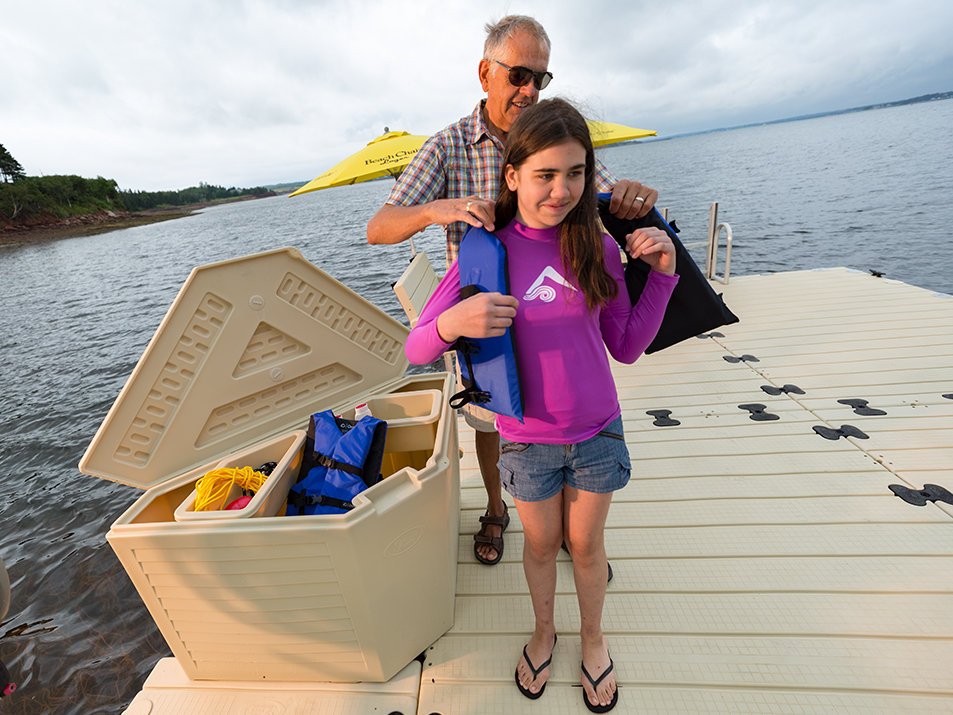
- Ramp access to piers and docks: ADA-compliant docks and recreational boating facilities must use flip-resistant, stable and firm surface materials. Accessible routes must connect restrooms, boarding spaces and parking.
- Edge protection and railings: In some cases, railings or curbs may be required to ensure safety. Edge protection must be a maximum of 4 inches high and 2 inches wide.
- Accessible fishing piers and platforms: Accessible fishing piers and platforms must provide clear floor or ground space and offer at least one turning space. Curbs or barriers must extend at least 2 inches above the platform or pier surface.
- Transfer systems for boat access: At boat launch ramps, boarding piers must provide clear pier space at least 60 inches wide. The ramp must extend the length of the boarding pier. Every 10 feet of pier edge must contain one or more clear openings at least 60 inches wide.
The ADA also outlines standards for beach access. You must provide at least one beach access route for each 0.5 mile of shoreline managed by the same entity. Beach access routes can be removable or permanent. Removable access routes are acceptable in coastal and shoreline areas where high flows or seasonal tides could damage or remove a permanent structure. These routes must coincide or be in the same general areas as pedestrian access points.
You should also note standards for other water-related elements like swimming pools, wading pools and spas. Accessible swimming pools and spas have at least two accessible means of entry. The primary entry must either be a pool lift that a person with a disability can independently operate or a sloped entry into the water. Water play components must comply with Play Area Guidelines.
Accessible Trails and Pathways
Accessible public waterfront trails have firm, stable surfaces with gentle slopes, regular rest areas and clear signage to ensure enjoyable and safe visitor use. Consider these requirements:
- Trail surface materials and maintenance: New trails designed for pedestrians or hikers must comply with technical requirements. Surfaces of passing trails, rest areas and trails must be stable and not affected by weather conditions. Asphalt or concrete paving is appropriate for highly developed areas.
- Rest areas and passing spaces: Passing spaces must measure at least 60 by 60 inches. Passing spaces and rest areas can overlap, but the ground surface slope cannot exceed 2% in any direction.
- Signage and wayfinding: You must use signs to identify accessible areas, permanent rooms and spaces. You should also provide informational signs to direct visitors to specific facilities and areas.
Implementing ADA-Compliant Waterfront Access: A Step-by-Step Approach
Implementing ADA-compliant access goes beyond meeting legal requirements. While adhering to these standards can help you avoid penalties or fines, accessible spaces also support your community. Accessible waterfront properties promote social inclusion and equity and ensure safety and usability for all visitors. Follow these three steps to implement a compliant approach:
1. Conduct an ADA Self-Evaluation
Your first step toward compliance is conducting a self-evaluation. Assessing your current facilities and features allows you to identify areas for improvement. Conduct your evaluation by:
- Reviewing existing facilities and programs: Compile resources like ADA checklists and compliance guides. Begin your evaluation with key areas like restrooms, entrances, parking spaces and signage.
- Identifying barriers to accessibility: Conduct a physical walk-through of your property and take measurements for public areas. For example, measure the widths, heights and slopes of openings, walkways and entrances. Note any barriers, such as narrow doorways, steps without a nearby ramp or inaccessible restrooms.
- Documenting findings and recommendations: Record everything, positive and negative, that you find. Detailed reports of your findings can help you prioritize areas for improvement. Consider the frequency of use, safety and impact of the spaces you need to change to create a game plan.
2. Develop a Transition Plan
It’s important to prioritize changes and set a realistic timeline for improvement. You will need to allocate resources efficiently and communicate your plan with your stakeholders and community.
- Prioritize accessibility improvements: Address safety concerns first and foremost. Remove any barriers that prevent basic access to emergency routes or critical spaces like restrooms. Consider high-use areas like parking lots and main paths.
- Establish timelines and budgets: Break your plan into short-term fixes and long-term goals. While it’s impossible to make massive changes overnight, small alterations can pack a big punch over time. Set budget estimates for each item on the agenda and identify opportunities for funding.
- Assign responsibilities: Designate leaders to oversee each element of your plan. Use project management tools and checklists to track progress over time and monitor completion.
- Seek community input: Engage your stakeholders and community in your process. Involve people with disabilities and advocacy groups to refine your plan. Update your community with improvements and timelines as you complete projects or alter your vision.
3. Train Staff and Volunteers
Making your park more accessible also means training your staff and volunteers. Training ensures proper use and maintenance of accessible features and fosters a culture of inclusion. Consider learning opportunities like:
- ADA awareness training: Awareness training ensures your staff understands the basics of the ADA and why it’s important. This training can help workers identify physical and programmatic barriers that could prevent people with disabilities from enjoying the waterfront.
- Customer service skills for assisting individuals with disabilities: Customer service training can give your team the communication skills, problem-solving and patience necessary to overcome complex challenges. Your team should be able to treat every visitor with respect and offer solutions to make their experiences more enjoyable.
- Proper use of accessibility equipment: It is critical to use and maintain accessibility equipment. Your staff should be able to operate equipment like gates, wheelchairs, assistive listening devices and lifts. Your team should also be able to show visitors how to use accessibility features so they can enjoy an independent park experience.
4. Find Funding and Resources
Making changes takes time and resources. Thankfully, there are plenty of opportunities for funding and assistance to make your transition to accessibility easier.
- Grant opportunities: You can find federal, state and local grants for accessibility improvements. Some private organizations and advocacy groups may also invest in your project to support the community.
- Technical assistance: Meeting compliance can seem complex, but several organizations and assistance centers can answer your questions and explain relevant concepts. Disability advocacy organizations can provide insight into features and requirements, and architects and consultants specializing in accessibility can aid in plan generation. ADA technical assistance centers can guide you through ADA-specific compliance needs.
- Tax incentives and credits: You may also be eligible for tax-related benefits. For example, the Internal Revenue Code offers up to $15,000 annually to businesses of any size looking to remove access barriers.
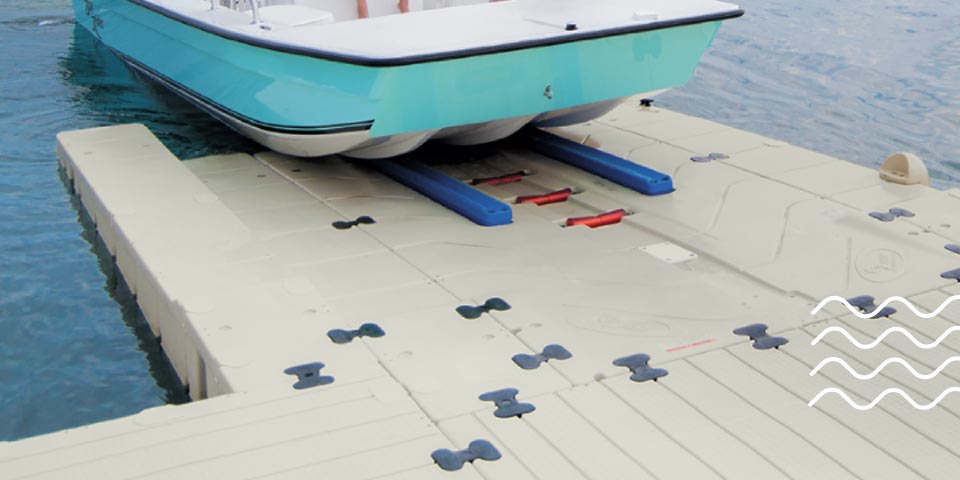
Achieve ADA Accessibility for Boat Docks With EZ Dock
ADA accessibility is critical for creating a welcoming and accessible waterfront property. When you need ADA-accessible docks, walkways and launches to promote inclusivity, trust EZ Dock to help.
EZ Dock ensures accessibility with every product. With over 25 years of experience making lasting floating docks, you can trust our team to create your ADA dock design. Request a quote to take the first step toward ADA accessibility today.